
Key Points
Ford is spending $5 billion to bring a new range of small, inexpensive electric vehicles to market.
The vehicles will be built on an innovative new platform that has been years in the making.
Is this a good idea given the state of the U.S. EV market?
- 10 stocks we like better than Ford Motor Company ›
You've probably heard that Ford Motor Company (NYSE: F) is making a big pivot away from electric vehicles (EVs), a result of slow sales of its current EVs and the Trump Administration's decision to end most tax credits and subsidies for EV buyers.
That's partly true.
Will AI create the world's first trillionaire? Our team just released a report on the one little-known company, called an "Indispensable Monopoly" providing the critical technology Nvidia and Intel both need. Continue »
While Ford has canceled (or indefinitely postponed) most of its planned fancier EVs, it's continuing with a $5 billion program to launch a line of affordable EVs built around a new low-cost architecture it calls the "Universal EV Platform."
Given the headwinds that EV sales in the U.S. have been facing, it seems like a risky bet. Is it?
A radical shift to make Ford's EVs cheaper and better
The Universal EV Platform is the result of a multiyear effort to develop new ways to design and build electric Fords.
Its name is a riff on some of Ford's earliest advertising, which branded the original Ford Model T as a "Universal Car." Just as the Model T's chassis spawned sedans, roadsters, two-seater coupes, and several different kinds of small trucks (including the first Ford pickups), the Universal EV platform will underpin a variety of vehicles and vehicle types.
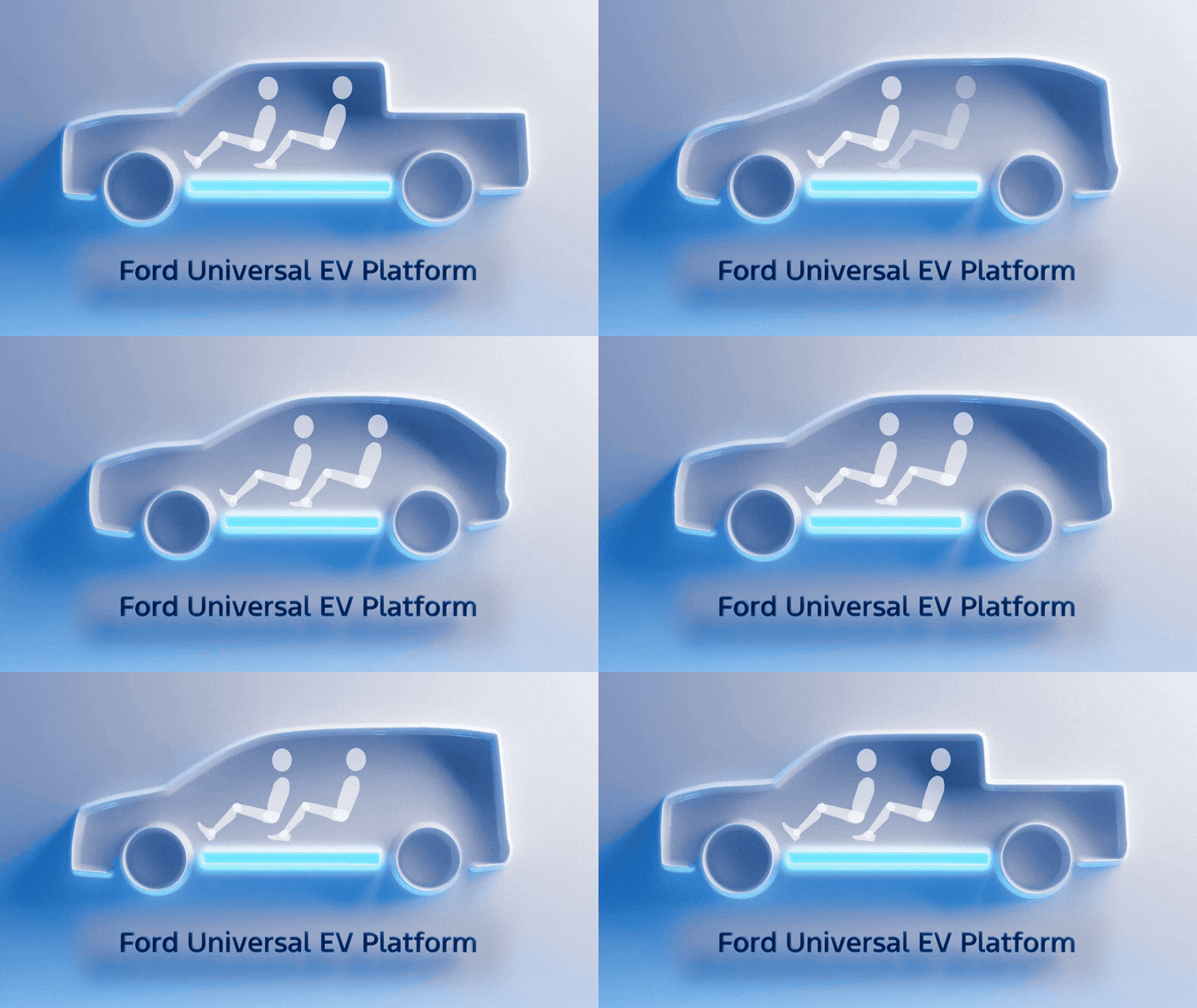
Ford said that its new Universal EV Platform will underpin a wide variety of affordable electric vehicles coming over the next few years. Image source: Ford Motor Company.
Ford hasn't told us everything yet, but we know the platform is full of innovations designed to make it simpler to produce, which will lower its cost. It's also designed to maximize efficiency, as more efficiency means engineers can reduce the size (and weight, and cost) of the battery pack while still delivering good range.
"It represents the most radical change on how we design and how we build vehicles at Ford since the Model T," CEO Jim Farley said last month.
Ford is said to be targeting a range of over 300 miles for the Universal EV–based vehicles.
What Ford will build on this new lower-cost EV platform
First up is a fully electric pickup truck due next year with an expected starting price of around $30,000. This isn't an F-150: Ford has described it as a "midsize four-door" pickup, promising a roomy interior (thanks to the shape of the battery pack) and superefficient aerodynamics to maximize range.
That new electric pickup will be followed by two- and three-row crossover SUVs and two new electric sedans, all by the end of the decade, Ford has said. What follows will depend on several factors -- including the state of U.S. EV regulations in the post-Trump era.
How Ford expects the Universal EV to bolster its business
Farley said last month that the Universal EV Platform gives Ford "a scalable hedge against a potential regulation snapback in the future."
It's also a means of competing with Chinese low-cost EV makers like BYD (OTC: BYDDY) as they continue to expand their sales networks around the world. That will benefit Ford no matter what happens in the United States.
Even without the recent spike in U.S. gas prices, all of that makes Ford's $5 billion bet seem like a pretty good one.
Should you buy stock in Ford Motor Company right now?
Before you buy stock in Ford Motor Company, consider this:
The Motley Fool Stock Advisor analyst team just identified what they believe are the 10 best stocks for investors to buy now… and Ford Motor Company wasn’t one of them. The 10 stocks that made the cut could produce monster returns in the coming years.
Consider when Netflix made this list on December 17, 2004... if you invested $1,000 at the time of our recommendation, you’d have $530,233!* Or when Nvidia made this list on April 15, 2005... if you invested $1,000 at the time of our recommendation, you’d have $1,119,682!*
Now, it’s worth noting Stock Advisor’s total average return is 955% — a market-crushing outperformance compared to 191% for the S&P 500. Don't miss the latest top 10 list, available with Stock Advisor, and join an investing community built by individual investors for individual investors.
*Stock Advisor returns as of March 10, 2026.
John Rosevear has no position in any of the stocks mentioned. The Motley Fool recommends BYD Company. The Motley Fool has a disclosure policy.
The views and opinions expressed herein are the views and opinions of the author and do not necessarily reflect those of Nasdaq, Inc.

