
Sify Technologies Limited (NASDAQ:SIFY), is not the largest company out there, but it saw a double-digit share price rise of over 10% in the past couple of months on the NASDAQCM. As a small cap stock, hardly covered by any analysts, there is generally more of an opportunity for mispricing as there is less activity to push the stock closer to fair value. Is there still an opportunity here to buy? Let’s examine Sify Technologies’s valuation and outlook in more detail to determine if there’s still a bargain opportunity.
Is Sify Technologies still cheap?
According to my price multiple model, where I compare the company's price-to-earnings ratio to the industry average, the stock currently looks expensive. I’ve used the price-to-earnings ratio in this instance because there’s not enough visibility to forecast its cash flows. The stock’s ratio of 27.53x is currently well-above the industry average of 16.9x, meaning that it is trading at a more expensive price relative to its peers. But, is there another opportunity to buy low in the future? Since Sify Technologies’s share price is quite volatile, this could mean it can sink lower (or rise even further) in the future, giving us another chance to invest. This is based on its high beta, which is a good indicator for how much the stock moves relative to the rest of the market.
What does the future of Sify Technologies look like?
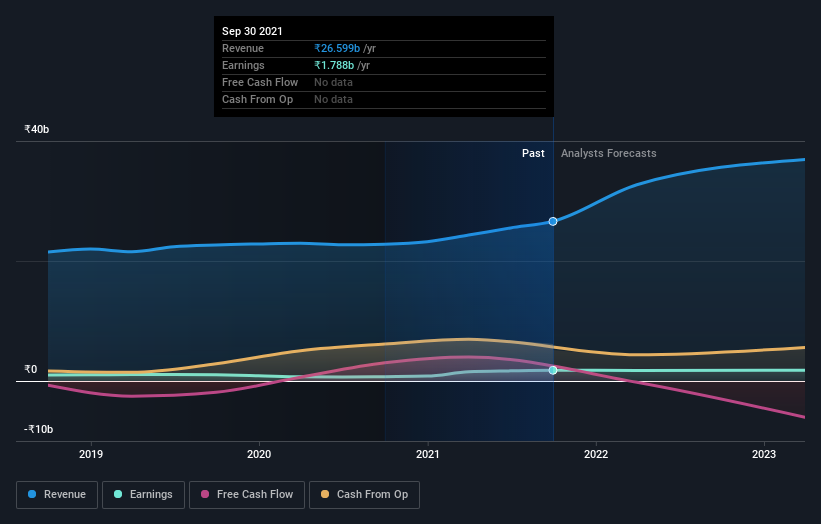
Future outlook is an important aspect when you’re looking at buying a stock, especially if you are an investor looking for growth in your portfolio. Although value investors would argue that it’s the intrinsic value relative to the price that matter the most, a more compelling investment thesis would be high growth potential at a cheap price. Though in the case of Sify Technologies, it is expected to deliver a negative earnings growth of -0.06%, which doesn’t help build up its investment thesis. It appears that risk of future uncertainty is high, at least in the near term.
What this means for you:
Are you a shareholder? If you believe SIFY should trade below its current price, selling high and buying it back up again when its price falls towards the industry PE ratio can be profitable. Given the uncertainty from negative growth in the future, this could be the right time to de-risk your portfolio. But before you make this decision, take a look at whether its fundamentals have changed.
Are you a potential investor? If you’ve been keeping tabs on SIFY for some time, now may not be the best time to enter into the stock. The price has climbed past its industry peers, in addition to a risky future outlook. However, there are also other important factors which we haven’t considered today, such as the track record of its management. Should the price fall in the future, will you be well-informed enough to buy?
So while earnings quality is important, it's equally important to consider the risks facing Sify Technologies at this point in time. In terms of investment risks, we've identified 1 warning sign with Sify Technologies, and understanding it should be part of your investment process.
If you are no longer interested in Sify Technologies, you can use our free platform to see our list of over 50 other stocks with a high growth potential.
This article by Simply Wall St is general in nature. We provide commentary based on historical data and analyst forecasts only using an unbiased methodology and our articles are not intended to be financial advice. It does not constitute a recommendation to buy or sell any stock, and does not take account of your objectives, or your financial situation. We aim to bring you long-term focused analysis driven by fundamental data. Note that our analysis may not factor in the latest price-sensitive company announcements or qualitative material. Simply Wall St has no position in any stocks mentioned.
Have feedback on this article? Concerned about the content? Get in touch with us directly. Alternatively, email editorial-team (at) simplywallst.com.
The views and opinions expressed herein are the views and opinions of the author and do not necessarily reflect those of Nasdaq, Inc.

