
What the Average Retiree Gets Wrong About Withdrawal Order in 2026
Key Points
If you are like most investors, you have a bevy of investment accounts.
A taxable account, a traditional tax-deferred account, and a Roth tax-advantaged account are all likely to be in the mix.
There's a big risk if you don't withdraw money from these accounts in the right order.
- The $23,760 Social Security bonus most retirees completely overlook ›
Most savers end up with multiple retirement accounts. There's really no way around it, but it makes life a lot more complicated when you retire. Make the wrong withdrawal decisions, and you could be left with higher taxes and even reduced benefits. Here's what the average retiree gets wrong about withdrawal order.
What retirement accounts do you have?
There are basically three types of accounts that investors end up with. The first is a taxable account, which is just a regular old brokerage or mutual fund account. You pay taxes as you go with regard to capital gains, dividends, and interest you may earn.
Will AI create the world's first trillionaire? Our team just released a report on the one little-known company, called an "Indispensable Monopoly" providing the critical technology Nvidia and Intel both need. Continue »

Image source: Getty Images.
The next accounts you likely have are both tax-advantaged and fall into two basic buckets. You may own a traditional IRA and/or a traditional 401(k). These are tax-deferred accounts, in which the money is deposited before taxes are paid. The upfront benefit is that you reduce your taxable income in the year you make a contribution. While the money is in the account, it grows tax-free. However, when you withdraw money from one of these accounts in retirement, all of the withdrawal is taxed as income.
The final bucket of accounts is in the Roth category. You may have a Roth IRA, a Roth 401(k), or both. You pay taxes on the money before it is invested in one of these accounts. The money grows tax-free while it is in the account. However, because you paid taxes on the way in, your withdrawals are tax-free after 59 1/2 (assuming you have owned the account for at least five years).
Withdrawal order is crucial to understand
If you retire early, you want to use money from a taxable account. There are penalties associated with pulling money from IRAs, 401(k)'s, Roth IRAs, and Roth 401(k)s if you take money out before 59 1/2. Unless you absolutely need the money, it is best to leave retirement accounts alone until at least that age.
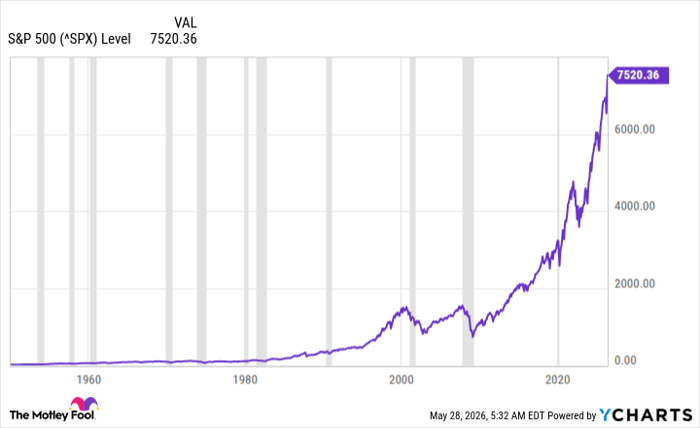
Once you hit 59 1/2, however, the situation changes dramatically. Many people looking to avoid taxes will tap their Roth accounts first. Logically, that makes sense, but it can leave you vulnerable to a bigger hit later. This is because there are mandatory withdrawal rules for Traditional IRAs and 401(k)s. At some point, you will be forced to take the money in these accounts. If the value of those accounts continues to appreciate because you don't withdraw from them, your withdrawals may be larger than you expect.
Larger mandatory withdrawals mean more taxable income and higher taxes. Worse, depending on the size of the mandatory withdrawals, you could end up with higher costs for medical care if your Medicare premiums go up. By delaying withdrawals from a Traditional IRA or Traditional 401(k), you could end up with higher taxes and higher costs. It is better to start withdrawing funds from these accounts as soon as possible to avoid the double hit.
That leaves Roth IRAs and Roth 401(k)s to be tapped last. Since they don't have withdrawal mandates, there is no problem with that timing. And since there are no taxes that need to be paid when you withdraw the cash, you don't have to worry about the impact of the money on your taxes or your medical costs. Yes, you'll pay more in taxes early on by waiting to tap your Roth accounts, but in the long run, it will likely save you taxes and reduce your expenses if you do.
Small things matter when you retire
Most of the time, money is pretty fungible, but not when it comes to the decision to withdraw funds from your accounts in retirement. If you make the wrong call, you could end up with a bigger tax hit than you expect later in life. In other words, your withdrawal order matters in 2026 (and every year thereafter, too).
The $23,760 Social Security bonus most retirees completely overlook
If you're like most Americans, you're a few years (or more) behind on your retirement savings. But a handful of little-known "Social Security secrets" could help ensure a boost in your retirement income.
One easy trick could pay you as much as $23,760 more... each year! Once you learn how to maximize your Social Security benefits, we think you could retire confidently with the peace of mind we're all after. Join Stock Advisor to learn more about these strategies.
View the "Social Security secrets" »
The Motley Fool has a disclosure policy.
