
S&P 500 over-extension and capitulation

Machine-learning forecast
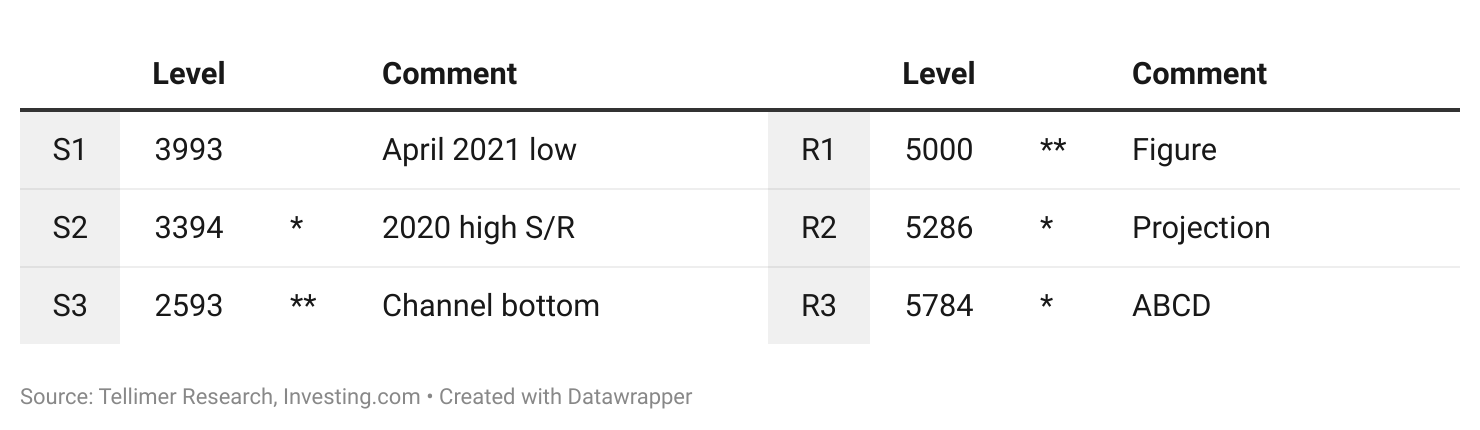
Our machine-learning model forecasts a predominantly sideways move for the S&P 500, accompanied by a moderate increase in volatility over the next 12 months. It forecasts a -8.5% drop to 4057 by January 2022, followed by a rally up to a new all-time high of 5081 by June 2022 – which is 14.6% above its current level.
Lastly, a sell-off down to 4304 by September 2022 leaves the S&P 500 down 2.9% from its current level.
Over-extension and capitulation
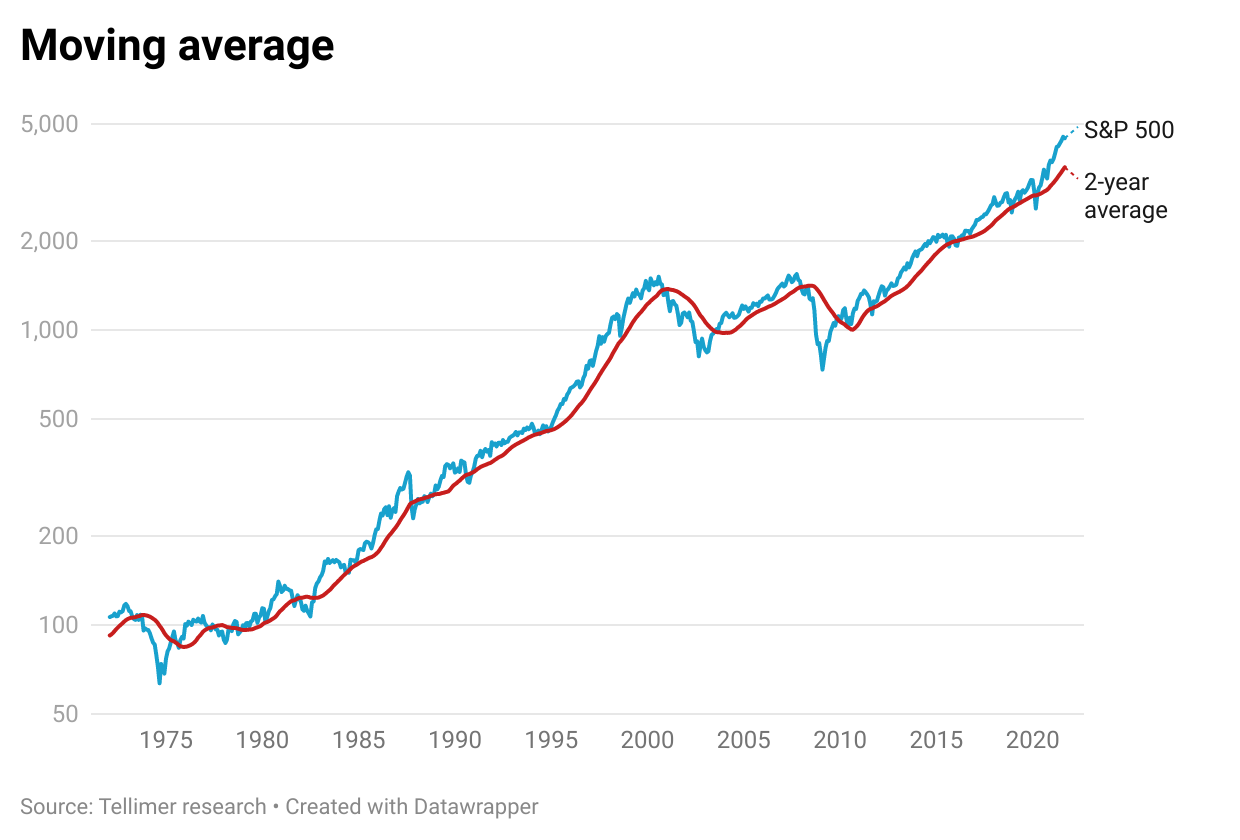
Analysing the historical divergence between the S&P 500 and its two-year moving average price gives one indication of how over-extended the market is and enables us to construct one-, three-, six- and nine-month expected returns.
Divergence
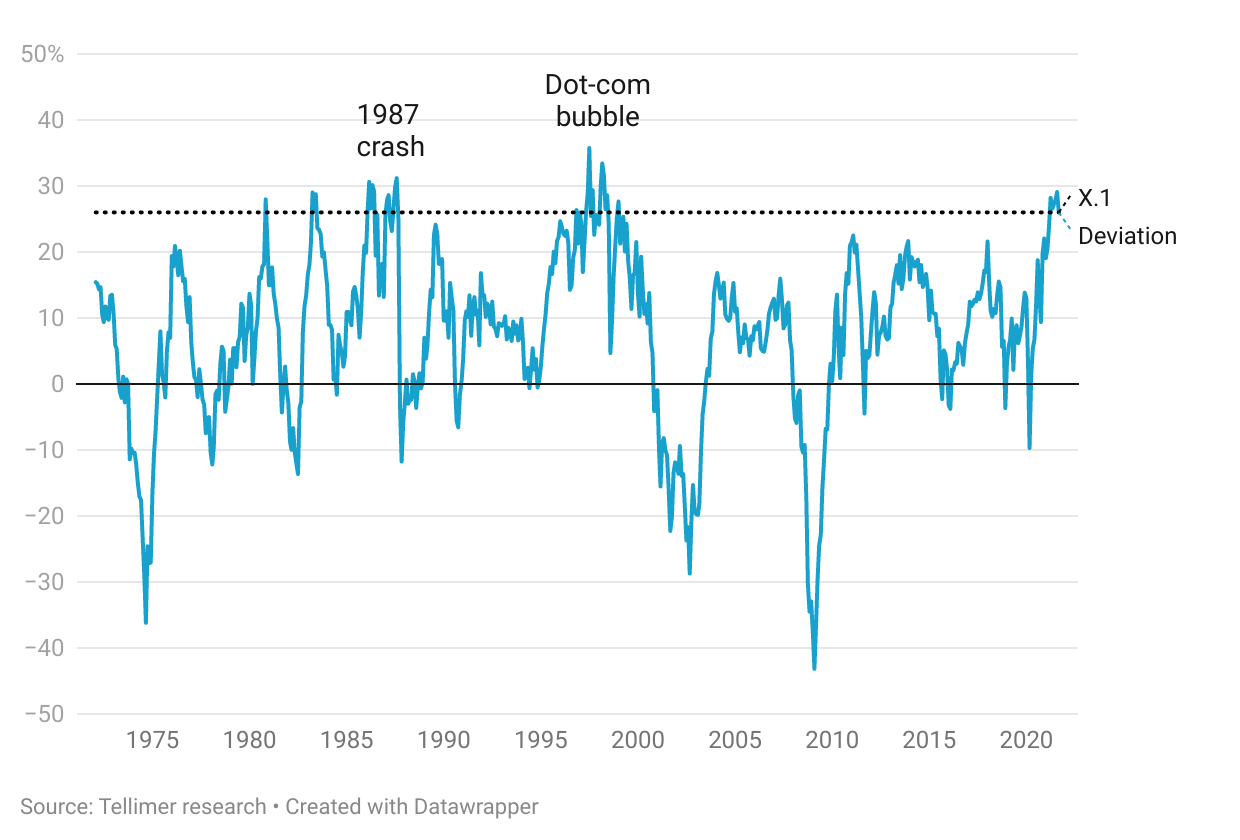
The S&P 500 is currently trading at a 26% premium to its trailing two-year historical average price. Fewer than 6% of all months historically have deviated this far from the two-year average since 1970, making it a reasonably extreme event.
Other notable periods that proceeded such an over-extension include the 1987 Black Monday crash and the 1999-2000 dot-com bubble.
Historical performance
Quantitatively, the times in which the S&P 500 has overextended by 26% or more in the past have led to a negative forward (projected) return over one- and three-month time horizons, and only a slightly positive return over six- and nine-month time horizons. All forward returns underperform the historical expected return of the S&P 500 over those time horizons.
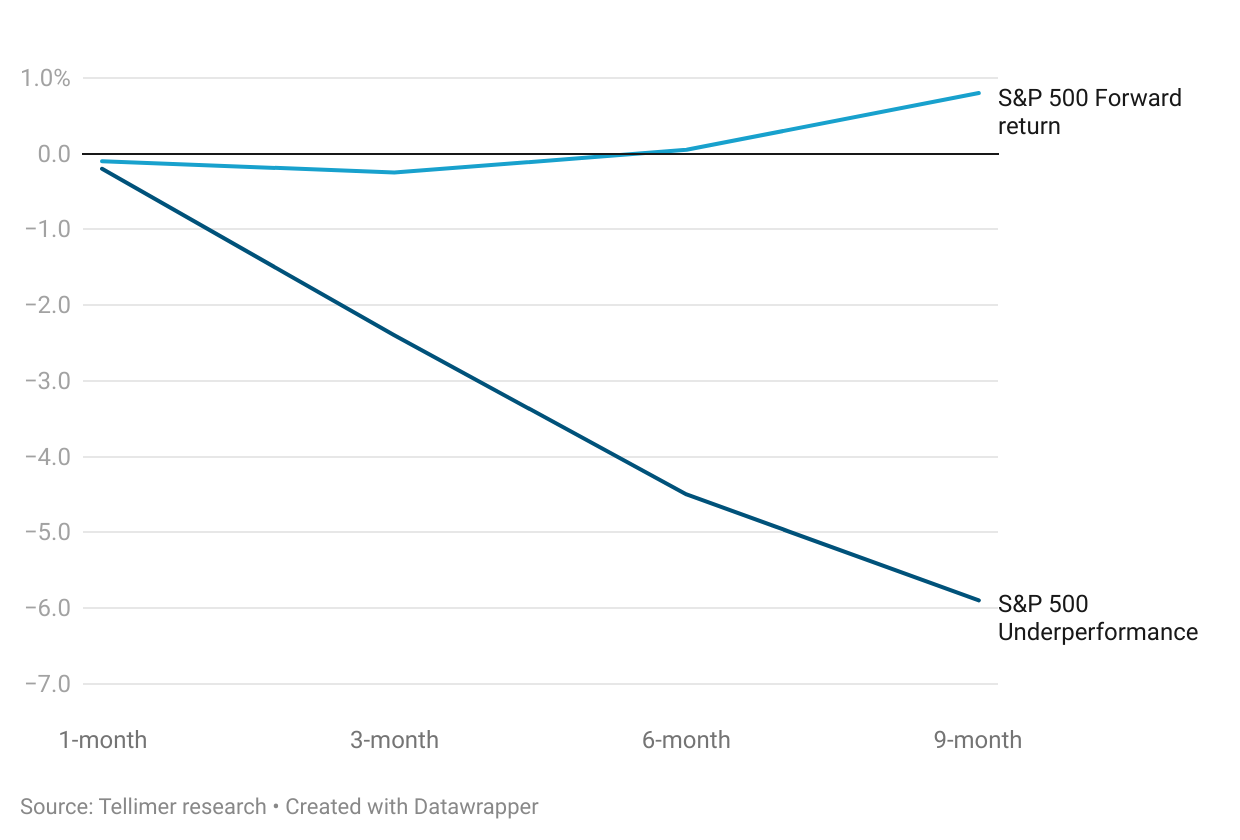
This highlights the expectation that the S&P 500 will trade predominantly sideways over the next nine months, leading to a period of relative underperformance – the magnitude of which will approach 6%.
The opposite end of the curve
For those who are curious, here is a graph of the forward returns for all historical periods that are over two standard deviations beyond the two-year moving average (both above and below).
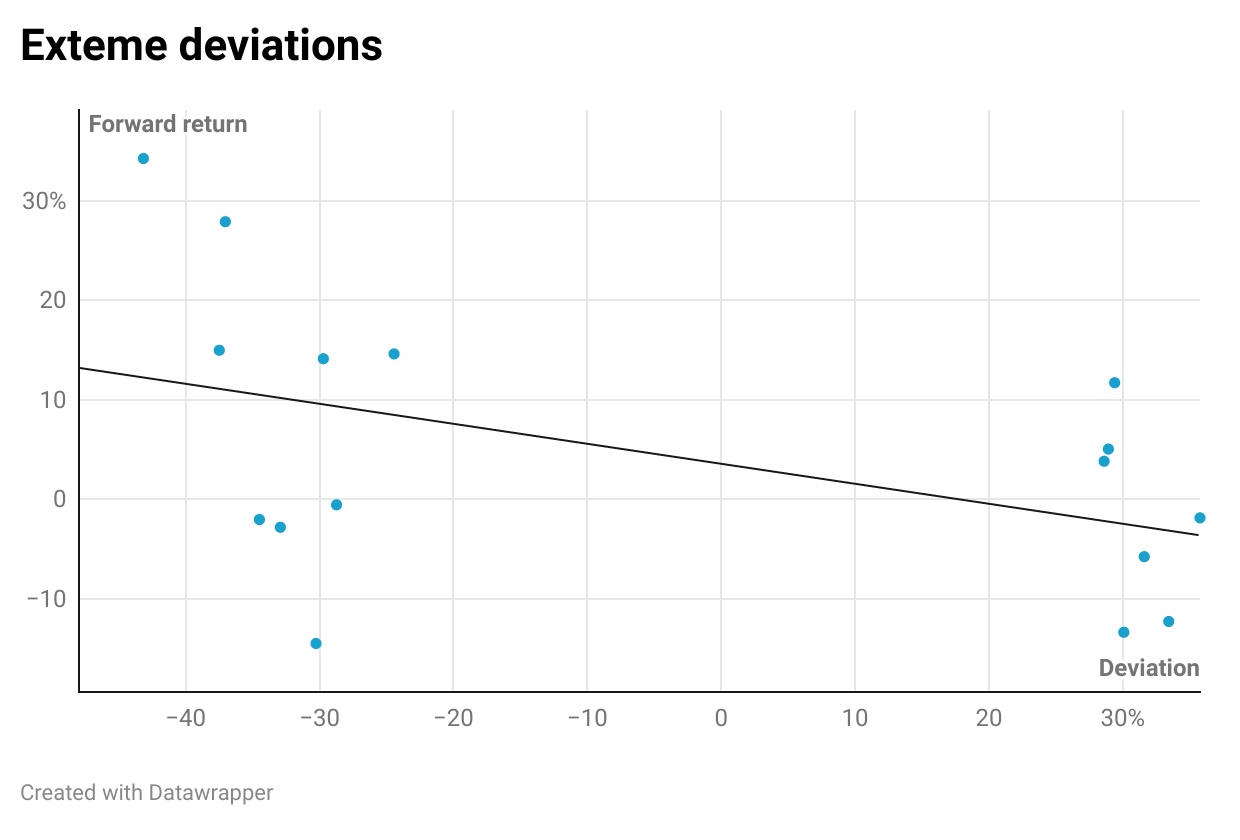
The linear regression line highlights a trend toward positive forward returns for large negative deviations (when the S&P 500 is a long way below its average) and negative forward returns for large positive deviations (when the S&P 500 is a long way above its average), such as where we are currently.
