
Wall Street is full of extremely smart, well-educated, highly compensated individuals in charge of managing billions of dollars of investors' money. But the truth is, most of them aren't worth their fees.
You don't need to be a Wall Street insider to beat most actively managed mutual funds. A simple investment strategy has outperformed nearly 88% of funds over the past 15 years, and its relative performance typically gets better over time. For long-term investors, it's one of the best ways to grow your wealth.
All you have to do is buy an S&P 500 index fund like the Vanguard S&P 500 ETF (NYSEMKT: VOO). That's because the vast majority of actively managed large-cap mutual funds fail to outperform the benchmark index after accounting for the fees they charge.
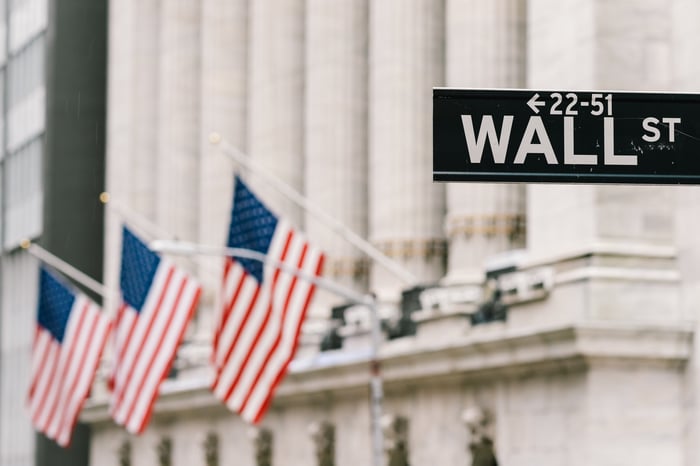
Image source: Getty Images.
Why it's virtually impossible for actively managed funds to outperform in the long run
S&P Global publishes the SPIVA (S&P Indices Versus Active) Scorecard twice a year. It compares the performance of actively managed mutual funds net of fees to their benchmark S&P indexes. It shows the results for periods of one, three, five, 10, and 15 years, adjusting for survivorship bias and other factors. Here are the most recent results for large-cap funds.
| 1 Year | 3 Years | 5 Years | 10 Years | 15 Years | |
|---|---|---|---|---|---|
| Percent of active funds outperforming | 40.32% | 20.22% | 21.32% | 12.58% | 12.02% |
Data source: S&P Global.
As you can see, actively managed mutual fund results generally get worse, as a group, over time. There's a very simple explanation for that.
When a fund manager decides to buy or sell a stock, someone else needs to be on the other side of that trade willing to sell the stock to them or buy it from them. Most often, that counterparty is another institutional investor, like a competing fund manager. But if one is buying and the other is selling, they can't both be making the correct decision.
As such, the odds that a fund manager can outperform the market based on their buy and sell decisions alone is close to 50-50. But when you factor in the fees mutual funds charge, the odds fall pretty quickly. Mutual fund fees can drag total returns for investors down by more than 1 percentage point. And when the market gains an average of around 10% per year, that's quite a significant chunk of your returns. As you can see, fees cause the percentage of funds outperforming in any single year to drop down to close to 40%.
What's more, those that outperform in one year rarely repeat that in the next. So, you can't simply select from the funds that have outperformed recently and expect them to continue doing so. That said, there are fund managers that can produce market-beating returns over the long run. The problem is that it's impossible to identify them beforehand. And you can never be sure if their past performance is the result of skill or luck.
The biggest factor impacting investment returns
As discussed above, the reason the vast majority of fund managers fail to beat the market is the fees charged by fund companies. If you can reduce your fees, or your "costs of participation," as Vanguard founder Jack Bogle called it, you can outperform almost all of them given a long enough time horizon.
Without a fund manager, a team of analysts, and a cadre of other employees to pay, index fund providers can keep their fees extremely low. The Vanguard S&P 500 ETF, for example, has an expense ratio of 0.03%. That means you'll pay just a tiny fraction in fees relative to actively managed large-cap mutual funds.
What's more, the fund has an extremely strong record of closely tracking the index. In other words, the value of the fund never deviates too far from the relative value of the S&P 500. That means you'll see returns that very closely match the returns of the index.
There are several competing index funds, but Vanguard's low fees and strong track record make it a top choice for index investors. And if you're thinking about buying a traditional actively managed mutual fund, consider your alternatives before pressing the "buy" button.
Should you invest $1,000 in Vanguard S&P 500 ETF right now?
Before you buy stock in Vanguard S&P 500 ETF, consider this:
The Motley Fool Stock Advisor analyst team just identified what they believe are the 10 best stocks for investors to buy now… and Vanguard S&P 500 ETF wasn’t one of them. The 10 stocks that made the cut could produce monster returns in the coming years.
Consider when Nvidia made this list on April 15, 2005... if you invested $1,000 at the time of our recommendation, you’d have $692,784!*
Stock Advisor provides investors with an easy-to-follow blueprint for success, including guidance on building a portfolio, regular updates from analysts, and two new stock picks each month. The Stock Advisor service has more than quadrupled the return of S&P 500 since 2002*.
*Stock Advisor returns as of July 22, 2024
Adam Levy has no position in any of the stocks mentioned. The Motley Fool has positions in and recommends Vanguard S&P 500 ETF. The Motley Fool has a disclosure policy.
The views and opinions expressed herein are the views and opinions of the author and do not necessarily reflect those of Nasdaq, Inc.

