
Under the guidance of CEO Tricia Griffith, The Progressive Corporation (NYSE:PGR) has performed reasonably well recently. In light of this performance, CEO compensation will probably not be the main focus for shareholders as they go into the AGM on 07 May 2021. However, some shareholders may still be hesitant of being overly generous with CEO compensation.
How Does Total Compensation For Tricia Griffith Compare With Other Companies In The Industry?
According to our data, The Progressive Corporation has a market capitalization of US$59b, and paid its CEO total annual compensation worth US$15m over the year to December 2020. Notably, that's an increase of 8.4% over the year before. While this analysis focuses on total compensation, it's worth acknowledging that the salary portion is lower, valued at US$981k.
In comparison with other companies in the industry with market capitalizations over US$8.0b , the reported median total CEO compensation was US$11m. This suggests that Tricia Griffith is paid more than the median for the industry. Moreover, Tricia Griffith also holds US$58m worth of Progressive stock directly under their own name, which reveals to us that they have a significant personal stake in the company.
| Component | 2020 | 2019 | Proportion (2020) |
| Salary | US$981k | US$888k | 6% |
| Other | US$14m | US$13m | 94% |
| Total Compensation | US$15m | US$14m | 100% |
Speaking on an industry level, nearly 18% of total compensation represents salary, while the remainder of 82% is other remuneration. In Progressive's case, non-salary compensation represents a greater slice of total remuneration, in comparison to the broader industry. If non-salary compensation dominates total pay, it's an indicator that the executive's salary is tied to company performance.
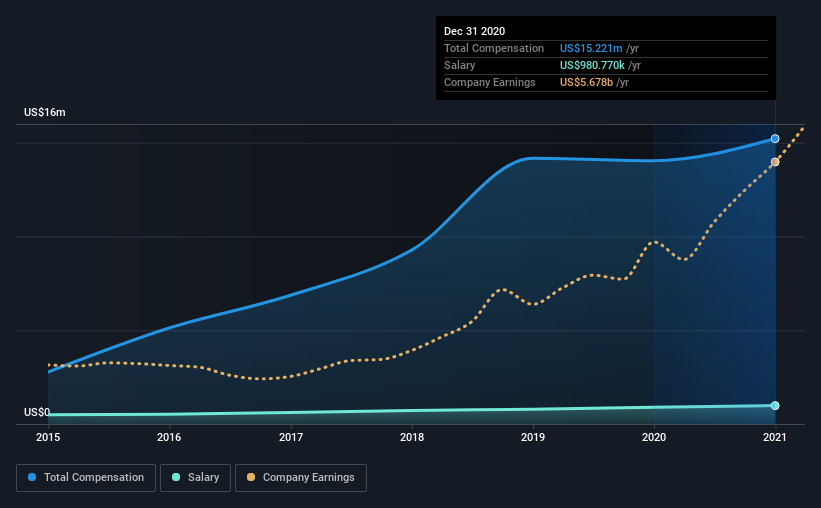
A Look at The Progressive Corporation's Growth Numbers
Over the past three years, The Progressive Corporation has seen its earnings per share (EPS) grow by 50% per year. It achieved revenue growth of 15% over the last year.
Overall this is a positive result for shareholders, showing that the company has improved in recent years. This sort of respectable year-on-year revenue growth is often seen at a healthy, growing business. Moving away from current form for a second, it could be important to check this free visual depiction of what analysts expect for the future.
Has The Progressive Corporation Been A Good Investment?
Most shareholders would probably be pleased with The Progressive Corporation for providing a total return of 91% over three years. This strong performance might mean some shareholders don't mind if the CEO were to be paid more than is normal for a company of its size.
To Conclude...
The company's decent performance might have made most shareholders happy, possibly making CEO remuneration the least of the concerns to be discussed in the upcoming AGM. However, if the board proposes to increase the compensation, some shareholders might have questions given that the CEO is already being paid higher than the industry.
CEO pay is simply one of the many factors that need to be considered while examining business performance. We identified 3 warning signs for Progressive (1 can't be ignored!) that you should be aware of before investing here.
Of course, you might find a fantastic investment by looking at a different set of stocks. So take a peek at this free list of interesting companies.
This article by Simply Wall St is general in nature. It does not constitute a recommendation to buy or sell any stock, and does not take account of your objectives, or your financial situation. We aim to bring you long-term focused analysis driven by fundamental data. Note that our analysis may not factor in the latest price-sensitive company announcements or qualitative material. Simply Wall St has no position in any stocks mentioned.
Have feedback on this article? Concerned about the content? Get in touch with us directly. Alternatively, email editorial-team (at) simplywallst.com.
The views and opinions expressed herein are the views and opinions of the author and do not necessarily reflect those of Nasdaq, Inc.

