The clean energy transition is well underway with wind and solar power key cogs. While use of these renewables can yield significant reductions in global greenhouse gas emissions, their end-of-life (EoL) has the potential to create substantial amounts of waste. As a result, recycling is an increasingly important focus within these industries. In this report, we explore how recycling can create opportunities within the renewable energy value chain while also helping to alleviate supply chain risks.
Key Takeaways
- Aging renewable energy systems could create tens of millions of tons of waste over the coming decades, pointing to a growing need for robust recycling processes.1
- Companies throughout the wind and solar power value chains are accelerating efforts and developing new technologies to advance recycling efforts and boost the renewable energy industry’s sustainability.
- Renewables recycling has the potential to become a multi-billion dollar industry that helps to address potential supply shortages for essential minerals like copper.2
Renewable Energy Growth Creates Concerns About Future Waste
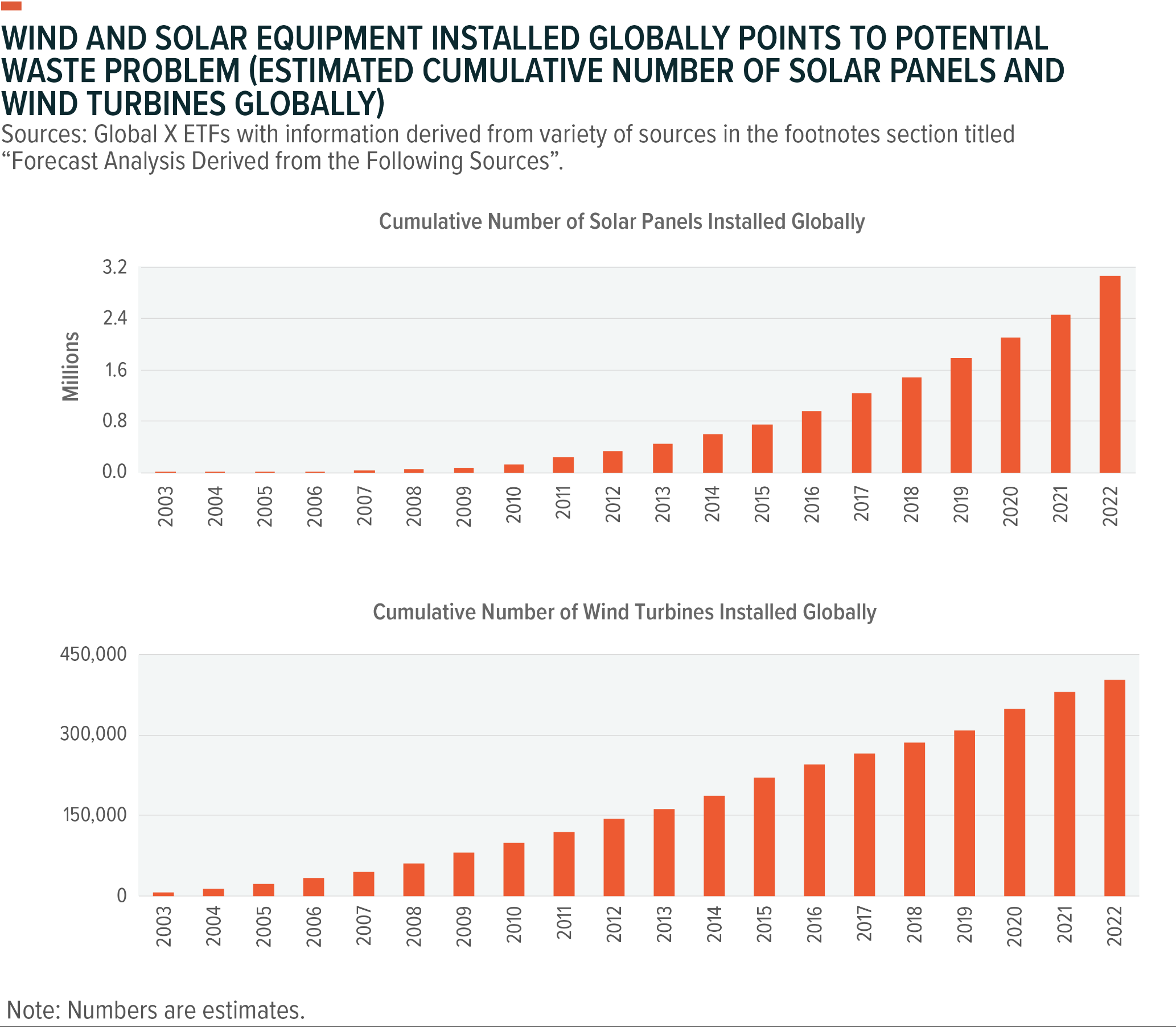
The substantial growth of renewable energy over the past two decades is attributable to advancements in solar and wind power technologies and their increasing affordability. As of year-end 2022, global large-scale solar power capacity exceeded 1,100 gigawatts (GW), up from just under 100GW in 2012, with an estimated 3 million solar panels installed around the world.3 Total wind power capacity reached over 900 gigawatts in 2022, with an estimate of more than 400,000 wind turbines installed globally.4
Solar panels generally last 25–30 years and wind turbines 20–25 years.5,6 Few solar and wind systems have hit their end-of-life yet, but that dynamic will change quickly in the coming years. Other panels and turbines that don’t pass the manufacturing process or that are damaged by extreme weather events will need to be discarded as well.
The remnants of these systems must go somewhere, otherwise they have the potential to create massive waste. We estimate total waste from EoL solar panels could exceed 61 million tons globally by 2045. Waste from decommissioned wind turbine blades could total more than 14 million tons by the early 2040s.7 For wind and solar power systems to remain sustainable throughout their entire project lifecycles, recycling processes are needed.
Improved Recycling Methods Can Help Alleviate Waste and Supply Chain Risks
Recycling processes for solar panels and wind turbines exist, but the methods are often more costly than simply discarding them into landfills. For example, in the United States, it can cost $15 to $45 to recycle one solar panel, versus only $1 to $5 to dispose of it in a landfill.8 Also, current recycling techniques are not yet 100% efficient, and epoxy-based wind turbine blades made of carbon fibre and fibre glass are particularly hard to recycle.9
Wind and solar panel manufacturers are ramping up efforts to improve their recycling processes, and the number of companies focused on recycling is expanding quickly. In February 2023, leading wind turbine producer Vestas announced a chemical recycling technique that is a potential breakthrough for the industry.10 The chemical process can break down epoxy-based turbine blades into a raw material that can then be used to make new blades.11 The Danish company is working towards achieving zero-waste wind turbines by 2040. Vestas is also a member of an industry consortium focused on improving blade recycling. Also part of the consortium are manufacturers and developers such as LM Wind Power, Ørsted, and Siemens Gamesa.12
In the U.S. solar industry, several companies stand out, including First Solar, one of the only panel manufacturers with in-house recycling capabilities. The company offers recycling service agreements to customers as a way to cost-effectively manage EoL panels. Its process can recycle more than 90% of materials.13 In addition, companies like Solarcycle and We Recycle Solar are among companies focused solely on solar panel recycling that manufacturers and developers can turn to for recycling needs. In 2022, for example, residential solar installer Sunrun announced a partnership with Solarcycle to recycle and repower EoL panels on its systems.14
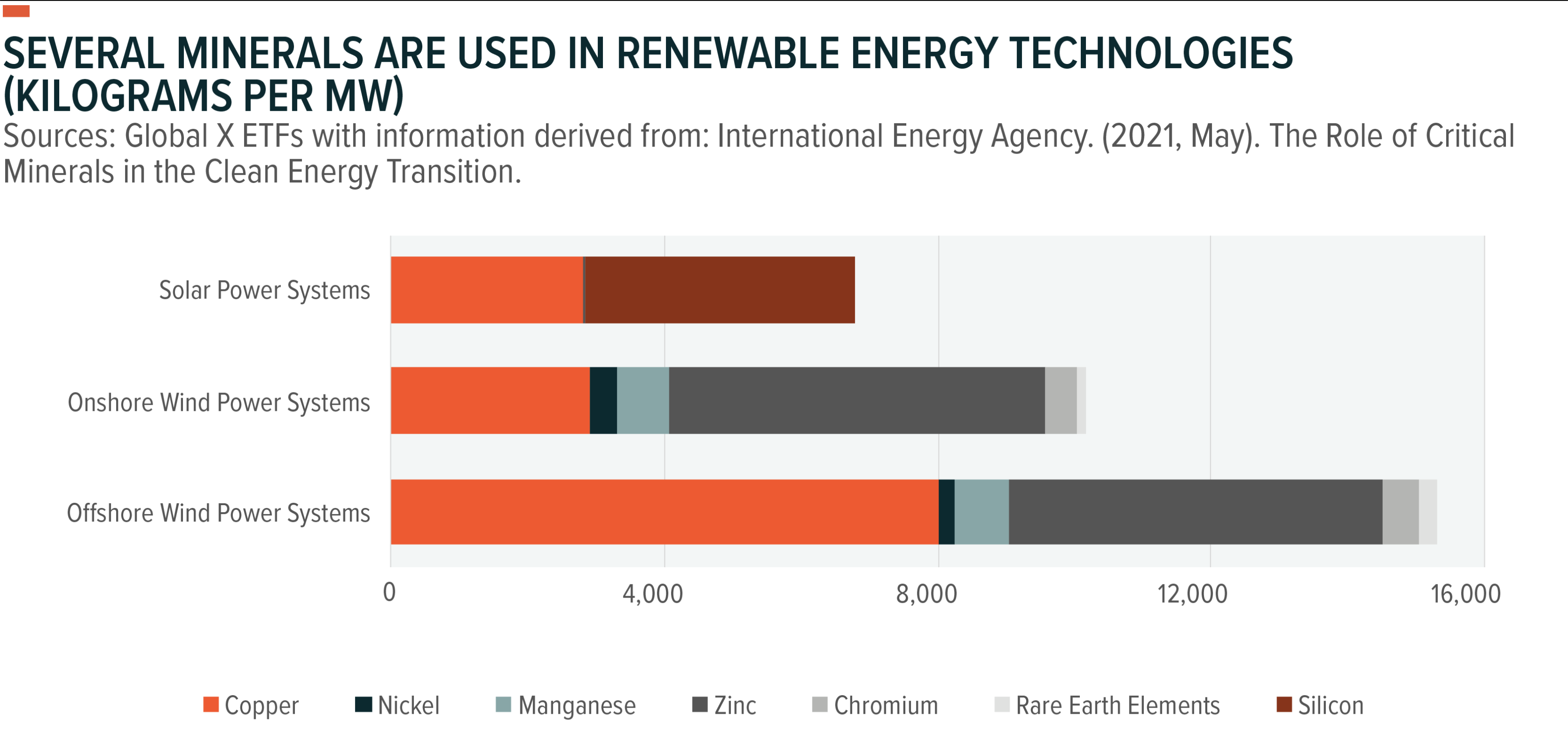
More robust EoL management processes for solar panels by 2030 could result in enough recovered raw materials to produce over 60 million new panels globally.15 In the United States, recycled solar panel materials could meet 30–50% of solar manufacturing demand by 2040.16 Also, using recycled materials from solar panels and wind turbines could reduce the need for mining new materials, helping to alleviate potential strain on supply chains. Copper is one such material because its conductive properties make it essential to wind and solar power technologies, and a significant undersupply is projected by 2030.17
Conclusion: Renewables Recycling Market Readies for Growth
In addition to company initiatives, the governments of the largest renewables markets, including China, the European Union, and the United States, are implementing policies and regulations that can accelerate the renewables recycling market. For example, in August 2023, Chinese institutions such as the National Development and Reform Commission announced plans to develop comprehensive renewables recycling systems by 2030.18 Globally, solar panel recycling alone may grow into a $2.7 billion opportunity by 2030, up from an estimated $170 million in 2022.19 In our view, these factors suggest that the maturation of solar and wind power industry recycling is readying to create significant opportunities for companies and sustainability initiatives over the coming decades.
Related ETFs
WNDY – Global X Wind Energy ETF
RNRG – Global X Renewable Energy Producers ETF
Click the fund name above to view current holdings. Holdings are subject to change. Current and future holdings are subject to risk.
1. Global X ETFs Analysis from variety of sources. See ‘Forecast Analysis Derived from the Following Sources’ footnote below for full list.
2. CNBC. (2023, May 13). Recycling ‘end-of-life’ solar panels, wind turbines, is about to be climate tech’s big waste business.
3. Global X ETFs Analysis from variety of sources. See ‘Forecast Analysis Derived from the Following Sources’ footnote below for full list.
4. Ibid.
5. Yale Environment 360. (2023, February 28). As Millions of Solar Panels Age Out, Recyclers Hope to Cash In.
6. National Grid. (n.d.). Can wind turbine blades by recycled?
7. Global X ETFs Analysis from variety of sources. See ‘Forecast Analysis Derived from the Following Sources’ footnote below for full list.
8. National Renewable Energy Laboratory (NREL). (2021, March). Solar Photovoltaic Recycling: A Survey of U.S. Policies and Initiatives.
9. American Clean Power. (2023, January). Decommissioned Wind Turbine Blade Management Strategies.
10. Vestas. (2023, February 8). Vestas unveils circularity solution to end landfill for turbine blades.
11. Ibid.
12. Vestas. (n.d.). Environment: Zero Waste. Accessed on October 5, 2023.
13. First Solar. (n.d.). Power A Circular Economy. Accessed on October 5, 2023.
14. PV Magazine. (2022, May 5). Sunrun signs on to recycle solar panels with Solarcycle.
15. Yale Environment 360. (2023, February 28). As Millions of Solar Panels Age Out, Recyclers Hope to Cash In.
16. National Renewable Energy Laboratory (NREL). (2022, February). Environmental and Circular Economy Implications of Solar Energy in a Decarbonized U.S. Grid.
17. WSJ. (2023, April 18). Copper Shortage Threatens Green Transition.
18. Recharge. (2023, August 18). China plans renewables recycling push as ageing green kit threatens waste deluge.
19. Rystad Energy. (2022, July 5). Reduce, reuse: Solar PV recycling market to be worth $2.7 billion by 2030.
Forecast Analysis Derived from the Following Sources
1. Energy Information Agency (EIA). (n.d.). International Data: Electricity. Accessed on October 2, 2023.
2. Energy Sage. (2023, November 6). What is the power output of a solar panel?
3. Greentech Media. (2019, December 17). Solar Technology Got Cheaper and Better in the 2010s. Now What?
4. NSK Global. (n.d.). Wind Turbines. Accessed on October 2, 2023.
5. Solar Energy World. (2023, February 6). Solar Panel Size and Weight Explained: How Big Are Solar Panels?
6. U.S. Department of Energy (DOE). (2023, August 24). Wind Turbines: the Bigger, the Better.
Originally published on Global X.
The views and opinions expressed herein are the views and opinions of the author and do not necessarily reflect those of Nasdaq, Inc.