
The average one-year price target for Offerpad Solutions (NYSE:OPAD) has been revised to $2.26 / share. This is an increase of 60.25% from the prior estimate of $1.41 dated December 3, 2025.
The price target is an average of many targets provided by analysts. The latest targets range from a low of $1.41 to a high of $3.68 / share. The average price target represents an increase of 63.84% from the latest reported closing price of $1.38 / share.
What is the Fund Sentiment?
There are 81 funds or institutions reporting positions in Offerpad Solutions. This is an decrease of 26 owner(s) or 24.30% in the last quarter. Average portfolio weight of all funds dedicated to OPAD is 0.09%, an increase of 369.01%. Total shares owned by institutions increased in the last three months by 14.70% to 11,881K shares. 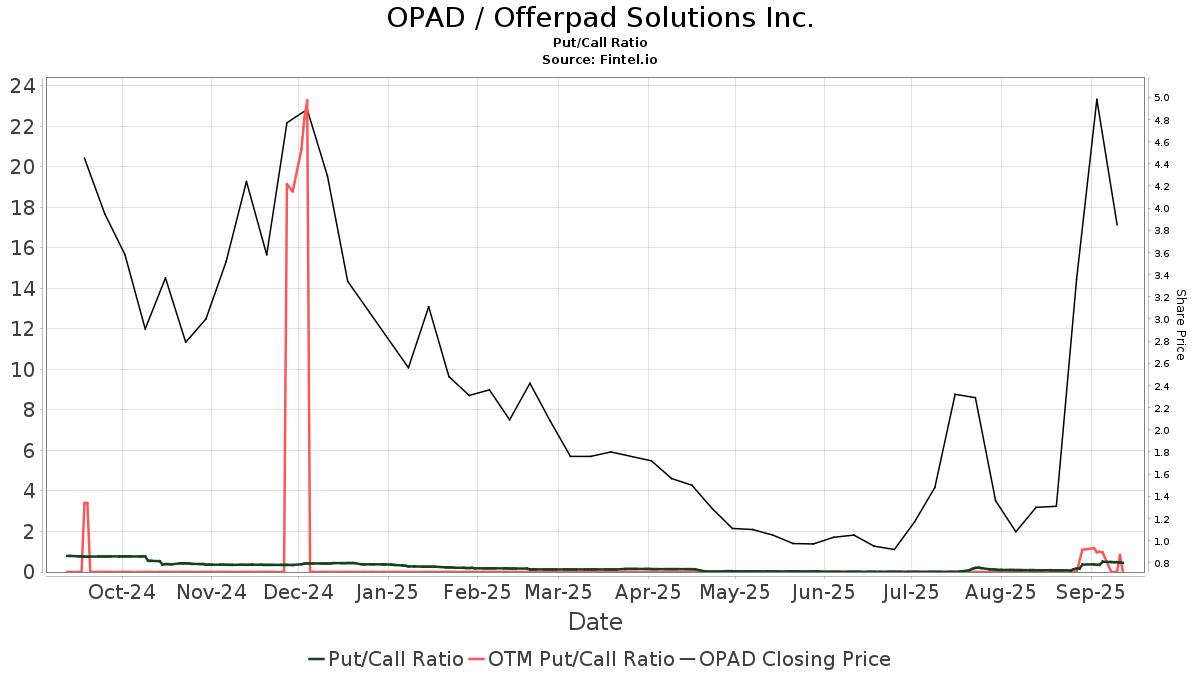 The put/call ratio of OPAD is 0.05, indicating a bullish outlook.
What are Other Shareholders Doing?
First American Financial holds 5,119K shares representing 13.89% ownership of the company. No change in the last quarter.
Kemnay Advisory Services holds 1,380K shares representing 3.74% ownership of the company. No change in the last quarter.
BRYN MAWR TRUST holds 595K shares representing 1.61% ownership of the company. No change in the last quarter.
VTSMX - Vanguard Total Stock Market Index Fund Investor Shares holds 565K shares representing 1.53% ownership of the company. No change in the last quarter.
Investure holds 522K shares representing 1.42% ownership of the company.
Fintel is one of the most comprehensive investing research platforms available to individual investors, traders, financial advisors, and small hedge funds.
Our data covers the world, and includes fundamentals, analyst reports, ownership data and fund sentiment, options sentiment, insider trading, options flow, unusual options trades, and much more. Additionally, our exclusive stock picks are powered by advanced, backtested quantitative models for improved profits.
This story originally appeared on Fintel.
The views and opinions expressed herein are the views and opinions of the author and do not necessarily reflect those of Nasdaq, Inc.

