
Fintel reports that on April 19, 2023, Citigroup maintained coverage of Microsoft (NASDAQ:MSFT) with a Buy recommendation.
Analyst Price Forecast Suggests 2.78% Upside
As of April 6, 2023, the average one-year price target for Microsoft is $296.39. The forecasts range from a low of $214.12 to a high of $365.40. The average price target represents an increase of 2.78% from its latest reported closing price of $288.37.
See our leaderboard of companies with the largest price target upside.
The projected annual revenue for Microsoft is $216,709MM, an increase of 6.18%. The projected annual non-GAAP EPS is $9.74.
Microsoft Declares $0.68 Dividend
On March 14, 2023 the company declared a regular quarterly dividend of $0.68 per share ($2.72 annualized). Shareholders of record as of May 18, 2023 will receive the payment on June 8, 2023. Previously, the company paid $0.68 per share.
At the current share price of $288.37 / share, the stock's dividend yield is 0.94%. Looking back five years and taking a sample every week, the average dividend yield has been 1.18%, the lowest has been 0.72%, and the highest has been 1.95%. The standard deviation of yields is 0.32 (n=236).
The current dividend yield is 0.74 standard deviations below the historical average.
Additionally, the company's dividend payout ratio is 0.30. The payout ratio tells us how much of a company's income is paid out in dividends. A payout ratio of one (1.0) means 100% of the company's income is paid in a dividend. A payout ratio greater than one means the company is dipping into savings in order to maintain its dividend - not a healthy situation. Companies with few growth prospects are expected to pay out most of their income in dividends, which typically means a payout ratio between 0.5 and 1.0. Companies with good growth prospects are expected to retain some earnings in order to invest in those growth prospects, which translates to a payout ratio of zero to 0.5.
The company's 3-Year dividend growth rate is 0.33%, demonstrating that it has increased its dividend over time.
What are Other Shareholders Doing?
Cubist Systematic Strategies holds 5K shares representing 0.00% ownership of the company. In it's prior filing, the firm reported owning 82K shares, representing a decrease of 1,628.56%. The firm decreased its portfolio allocation in MSFT by 93.82% over the last quarter.
Covey Capital Advisors holds 2K shares representing 0.00% ownership of the company. No change in the last quarter.
FSA Wealth Management holds 5K shares representing 0.00% ownership of the company. In it's prior filing, the firm reported owning 4K shares, representing an increase of 4.39%. The firm decreased its portfolio allocation in MSFT by 10.36% over the last quarter.
BNGLX - Ubs Global Allocation Fund holds 8K shares representing 0.00% ownership of the company. In it's prior filing, the firm reported owning 8K shares, representing a decrease of 1.18%. The firm increased its portfolio allocation in MSFT by 1.94% over the last quarter.
Versant Capital Management holds 31K shares representing 0.00% ownership of the company. In it's prior filing, the firm reported owning 28K shares, representing an increase of 9.20%. The firm increased its portfolio allocation in MSFT by 22.84% over the last quarter.
What is the Fund Sentiment?
There are 6952 funds or institutions reporting positions in Microsoft.
This is an increase
of
158
owner(s) or 2.33% in the last quarter.
Average portfolio weight of all funds dedicated to MSFT is 2.52%,
a decrease
of 24.55%.
Total shares owned by institutions increased
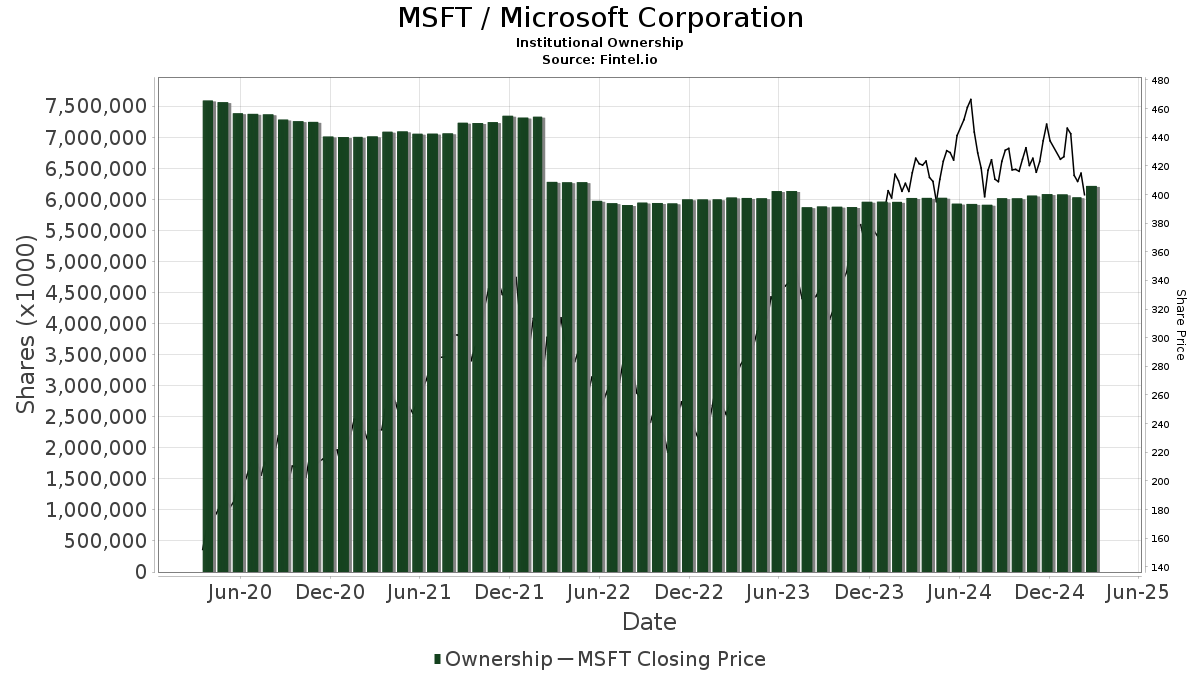
in the last three months by 0.41% to 6,022,977K shares.
 The put/call ratio of MSFT is 0.90, indicating a
bullish
outlook.
The put/call ratio of MSFT is 0.90, indicating a
bullish
outlook.
Microsoft Background Information
(This description is provided by the company.)
Microsoft enables digital transformation for the era of an intelligent cloud and an intelligent edge. Its mission is to empower every person and every organization on the planet to achieve more.
See all Microsoft regulatory filings.
This story originally appeared on Fintel.
The views and opinions expressed herein are the views and opinions of the author and do not necessarily reflect those of Nasdaq, Inc.

