FSLR: Sometimes A Cigar Is Just A Cigar
After a lifetime in and around financial markets, I am pretty familiar with the most common mistakes that traders make. You would also think that means that I avoid them myself but unfortunately that isn’t always the case, and the mistake that I most frequently see in myself is a tendency to overthink things. We all like to think that we are smart, and tend to look for complex, intricate reasons for trades when sometimes the obvious, simple course of action is the best. As Sigmund Freud once said in a different context, sometimes a cigar is just a cigar.
Because of that tendency to overcomplicate, when I heard this morning that President Biden had made an Earth Day pledge to cut U.S. greenhouse gas emissions by fifty percent by 2030, my initial reaction was cynicism. All sorts of excuses went through my head as to why fading the obvious trade on that was the best course of action.
First and foremost, these are a politician’s words, so are worth inherently less than those of a normal person's. Secondly, recent history is littered with pols who made grand statements on climate, and yet the world is still dependent on oil and gas above all else. Even coal is still a significant energy source. Those industries employ massive amounts of people in America and are an influential lobby, so real change through legislation is just about impossible. Lastly, and by no means least, simply projecting nine years ahead involves a lot of wishful thinking for somebody whose term in office lasts four years.
Then, mindful of my tendency to overthink, I checked myself. All of the above reasons to fade the obvious trade may well be valid, but there is one overwhelming reason why doing so would probably be a mistake: a lot of people will take that obvious trade, and markets move based on directional volume, not cynical logic.
So, I started to sniff around green energy stocks and one obvious candidate stood out:

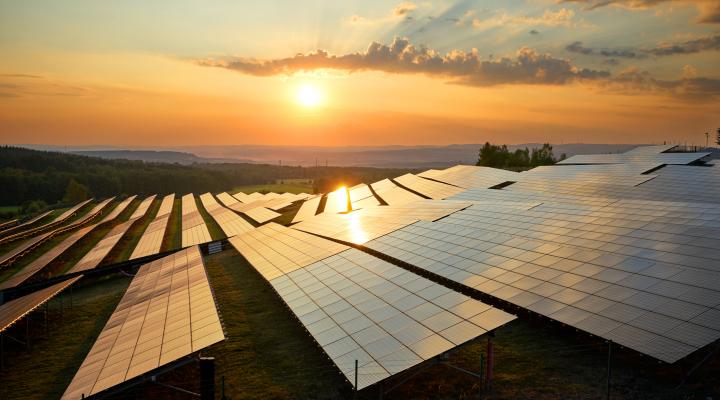
There is nothing clever or original about using First Solar (FSLR) to play an expected focus on green energy. They are, after all, the largest U.S. solar company and, as you can see from the one-year chart above, the stock went on a tear in the three months following November’s election. However, the recent pullback has taken FSLR back to its pre-election levels, and a case can even be made that it is value here, regardless of politics.
For one thing, First Solar actually makes money. In this market, trailing and forward P/Es of around 22 and 19, respectively, don’t look excessive. That is especially true in a business where the narrative is about growth, even if the actual numbers often clash with that narrative. That, however, is not the reason buying the stock makes sense. The value will serve to encourage those who look at it, but the main point is simply that there will be a lot more people looking at it over the next few weeks. A renewed commitment to green energy from the White House and the inevitable partisan debates to follow will make sure of that.
This is a trade about perception and the reactions of others, so overthinking it is dangerous. We were reminded this morning that Joe Biden will keep green energy in the conversation for a long time, and that will mean a lot of traders and investors looking for plays in the sector. First Solar is the obvious play within that obvious play, which would normally put me off.
In this case, though, its obviousness is a feature, not a bug, and looking for reasons to ignore the obvious would be foolish. In other words, this particular cigar is really just a cigar.
Do you want more of Martin? If you are familiar with Martin’s work, you will know that he brings a unique perspective to markets and actionable ideas based on that perspective. In addition to writing here, Martin also writes a free weekly newsletter with in-depth analysis and trade ideas focused on just one recently underperforming sector that is bouncing fast. To find out more and sign up for the free newsletter, just click here.
The views and opinions expressed herein are the views and opinions of the author and do not necessarily reflect those of Nasdaq, Inc.
In This Story
FSLROther Topics
Energy Sustainability
Martin Tillier
Martin Tillier spent years working in the Foreign Exchange market, which required an in-depth understanding of both the world’s markets and psychology and techniques of traders. In 2002, Martin left the markets, moved to the U.S., and opened a successful wine store, but the lure of the financial world proved too strong, leading Martin to join a major firm as financial advisor.
Read Martin's Bio