
Key Points
Nvidia is the king of the AI processor space, and literally wrote the playbook for the next generation of AI.
Alphabet has not only fended off AI-powered challenges to its search dominance, but has also embraced its own AI model, Gemini.
CoreWeave has seen explosive revenue growth, but has delivered poor stock performance since it peaked last summer.
- 10 stocks we like better than Nvidia ›
Ever since OpenAI's ChatGPT burst onto the scene in November 2022, people have been debating whether artificial intelligence (AI) is a flash in the pan, a market bubble, or a long-lasting trend.
Research from The Motley Fool indicates that 60% of American investors believe AI stocks will deliver strong long-term returns, and those stocks have seen explosive growth over the last three years.
Will AI create the world's first trillionaire? Our team just released a report on the one little-known company, called an "Indispensable Monopoly" providing the critical technology Nvidia and Intel both need. Continue »
But given all the growth that's already happened, which AI stocks are poised to dominate over the next decade? Here are the three that seem like the best bets to still be at the top of the pecking order -- and rewarding today's investors -- in 2036.
1. Nvidia
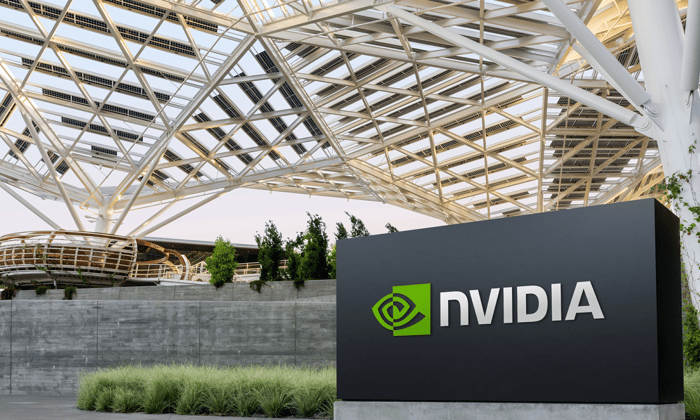
Image source: Nvidia.
It shouldn't come as a surprise to anyone that chipmaker Nvidia (NASDAQ: NVDA) is at the top of this list. The company's graphics processing units (GPUs) are universally regarded as the fastest, most advanced, and best general-purpose parallel processors around. So much so that all the data center GPUs it will produce in 2026 were sold out before the end of 2025.
But because of the massive computational requirements of AI, cutting-edge processors are mandatory, not optional. And that means companies hoping to stay at the forefront of the AI race will continue to gobble up as many of Nvidia's top-of-the-line GPUs as they can get.
Would-be challengers to Nvidia's dominance in the GPU niche have all so far fallen flat, but it is taking no chances. The company has launched collaborations with companies in a number of high-tech industries to create software and hardware that runs on or is compatible with Nvidia's systems and specifications. Among its partnerships are deals with electric vertical takeoff and landing (eVTOL) aircraft companies Archer Aviation and Joby Aviation to use Nvidia's IGX Thor platform for their next-generation aviation AI, and a collaboration with data center power and cooling system manufacturer Vertiv to design systems specifically to support Nvidia's 800 VDC power architecture.
By aligning entire industries with its AI hardware and software, Nvidia has likely cemented its place atop the AI pecking order for years, if not decades, to come.
2. Alphabet

Image source: Getty Images.
Google is an innovation powerhouse, and that definitely extends to innovation in AI. Its parent company, Alphabet (NASDAQ: GOOGL) (NASDAQ: GOOG), makes most of its money by selling ad space on its Google Search and YouTube platforms, giving it a revenue stream that's not tied to the success or failure of AI. Despite fears that chatbots could disrupt Google Search's dominance, ad revenue from Google Search has continued to climb steadily throughout the AI era, and the company reported $73.27 billion in free cash flow in 2025 alone.
All that cash is helping to fund Alphabet's AI ambitions. The company is planning for capital spending of $175 billion to $185 billion in 2026, and much of that will go toward AI infrastructure, according to CEO Sundar Pichai.
Alphabet's AI software efforts thus far have centered around its Gemini AI model, now in its third iteration, Gemini 3. The company's AI models process more than 10 billion tokens per minute, and the Gemini app has more than 750 million monthly active users. Alphabet has the deep pockets and broad ecosystem to remain at the forefront of AI for the next decade, if not longer.
3. CoreWeave
It would have been easy to put Microsoft in this spot because that company's AI efforts are all but certain to continue, and its size, scale, and early adoption of AI have put it in an excellent position to maintain a top spot in the AI ecosystem. However, I wanted to focus on a company that doesn't already have a trillion-plus-dollar valuation. And that's why I picked an AI pure-play company with a share price that has fallen by more than 50% from its peak: CoreWeave (NASDAQ: CRWV).
CoreWeave is sometimes referred to as a "neocloud" company: It offers AI-specific cloud infrastructure, supporting AI model training, agentic AI workflows, and other services geared to AI operations. It also allows its customers to rent Nvidia's top-of-the-line GPUs for their AI workloads. The company supports its cloud software platform with a distributed network of data centers. It claims "most of the world's leading AI labs, hyperscalers, and AI enterprises," including OpenAI and Meta Platforms as clients, but 67% of its 2025 revenue came from one customer: Microsoft.
Speaking of revenue, CoreWeave has seen explosive growth, from just $229 million in 2023 to $1.9 billion in 2024 and $5.1 billion in 2025. It's expecting revenue of at least $12 billion in 2026. While the data center buildout required to maintain this level of growth is keeping CoreWeave from becoming profitable, the company looks poised to continue growing as long as AI spending remains high.
Should you buy stock in Nvidia right now?
Before you buy stock in Nvidia, consider this:
The Motley Fool Stock Advisor analyst team just identified what they believe are the 10 best stocks for investors to buy now… and Nvidia wasn’t one of them. The 10 stocks that made the cut could produce monster returns in the coming years.
Consider when Netflix made this list on December 17, 2004... if you invested $1,000 at the time of our recommendation, you’d have $513,407!* Or when Nvidia made this list on April 15, 2005... if you invested $1,000 at the time of our recommendation, you’d have $1,123,237!*
Now, it’s worth noting Stock Advisor’s total average return is 938% — a market-crushing outperformance compared to 188% for the S&P 500. Don't miss the latest top 10 list, available with Stock Advisor, and join an investing community built by individual investors for individual investors.
*Stock Advisor returns as of March 17, 2026.
John Bromels has positions in Alphabet, Meta Platforms, Microsoft, and Nvidia. The Motley Fool has positions in and recommends Alphabet, Meta Platforms, Microsoft, Nvidia, and Vertiv. The Motley Fool has a disclosure policy.
The views and opinions expressed herein are the views and opinions of the author and do not necessarily reflect those of Nasdaq, Inc.

