

For many Americans, inflation has hit grocery budgets hard. Recent data from the U.S. Department of Agriculture's Consumer Price Index for food showed that grocery prices were 8.5% higher in March 2023 than they were in March 2022. And while the increased cost of groceries is expected to slow to a 6.6% rate in 2023 overall, the sticker shock isn't going away anytime soon.
See: 5 Brand-New Items at Dollar Tree That Cost Way More at Target
Related: How To Build Your Savings From Scratch
As we head into what most are calling a long-awaited recession, understanding how to properly defend against rising prices is a must. In this article, we'll discuss 10 ways you can recession-proof your grocery budget.

Plan Meals in Advance and Stick to Your Shopping List
One of the easiest ways to recession-proof your grocery budget is to have a plan before you even leave for the store. "Planning your meals for the week can help you avoid impulse purchases and reduce food waste," says Devon Ferguson, chef and senior editor of Carnivore Style. "Start by taking inventory of what you have on hand and plan meals around those ingredients. You can then create a shopping list based on your meal plan and only buy what you need."
Once you arrive at the grocery store, avoiding temptation is going to be the key to saving money. Sticking to the list you created can help you avoid those impulse buys, keeping your grocery budget in check.
More: 9 Best Aldi Products To Buy Instead of Name-Brand Alternatives
Costco's Best Deals? Employee Reveals 10 Standout Buys for Your Money

Take Advantage of Online Shopping
If you struggle to stick to the list and find yourself with impulse items in your shopping cart, take advantage of online shopping options. You'll be able to create your meal plan, order all the ingredients from home, and pick up your groceries curbside.
While some grocery stores will charge a small fee for online shopping, you're likely to still come out ahead.
See: 10 Items You Should Always Buy at Dollar Tree

Sign Up for Your Grocery Store's Loyalty Program
Most large grocery chains have their own loyalty programs. By signing up, you'll be able to add digital coupons to your account and get lower prices on certain items. Plus, stores like Safeway and Kroger have gas stations where loyalty members can also save on every gallon of gas.

Shop Sales
Grocery stores typically run sales on different items each week. It could be everyday items like milk, butter and cheese, or it could be items like meat or pasta. You can often find out about these sale items through the store's app or in their weekly flyer. If possible, try and plan your meals around these items.
Use a Credit Card That Rewards for Grocery Purchases
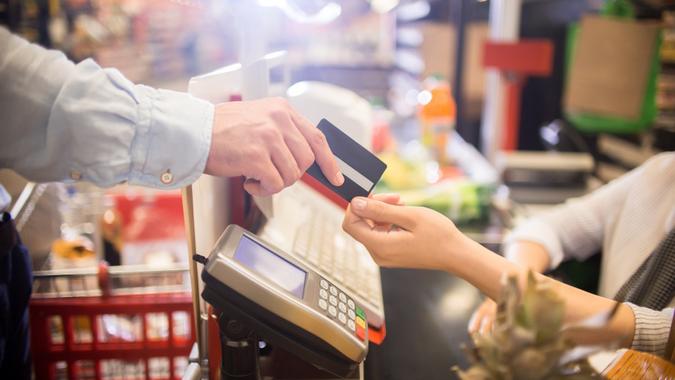
With groceries costing more, make sure you get all you can in return. There are several credit cards that provide bonus rewards for purchases made at grocery stores.
The Blue Cash Preferred® Card from American Express offers 6% cash back on up to $6,000 in grocery purchases each year. While this card comes with a $95 annual fee (waived the first year), you could instead choose the Capital One SavorOne Cash Rewards Credit Card which has no annual fee. You'll receive 3% cash back at grocery stores, plus, you'll earn a $200 bonus when you spend $500 on purchases within three months of account opening.
Learn: 8 Companies Behind Costco's Kirkland Brand Products

Use Coupons/Savings Apps
Another great way to save money on groceries is to take advantage of grocery rebate apps. Ibotta and Fetch are two of the more popular options. Each is free to download and allows you to save on items you purchase. What's best about these apps is that you can use them alongside coupons and credit card rewards.

Compare Prices Between Stores
If you're lucky enough to have multiple grocery stores nearby, make sure you're comparison shopping to see which stores have the best prices.
"If you want to find the best prices, downloading the Flipp.com app is a must," says Chris Watson, CEO of EatForLonger.com. "Flipp.com is a mobile app and website that provides users access to weekly ad circulars, deals, and online coupons for more than 2,000 stores, making it easier to save time and money on purchases."

Buy Store Brand Items
The next time you're about to pick up an item from the shelf, look and see if there is a generic store-brand version available instead. Not only do they usually have the exact same ingredients, but they can be significantly less expensive than their name-brand counterpart.
Find Out: 10 Aldi Brand Products Worth Buying
Look at Unit Prices
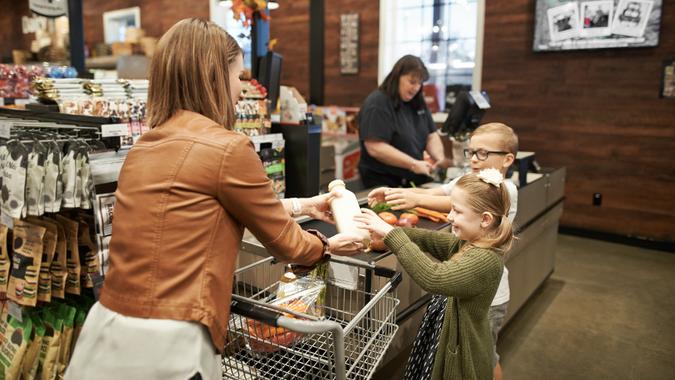
When most people comparison shop, they look at the total cost of each item. However, what you should do is look at the unit price. Grocery store pricing labels on the selves typically include the cost per ounce. When comparing two different items, one might have a higher overall price but might have a lower price per ounce.
This also works when you're purchasing in bulk from stores like Costco or Sam's Club. To understand the unit cost, simply divide the total cost by the quantity. For example, you might be purchasing paper towels. If there are 24 rolls in a package costing $18.50, the cost per roll would be $0.77. Understanding the unit prices can help you maximize your budget.

Choose Less Expensive Staples
It's no secret that meat can be expensive. Do your wallet a favor and switch things up for a meal or two throughout the week. Instead of pricey cuts of meat, find a recipe that calls for another protein. Beans and lentils are great options because they're filling and can leave you plenty of leftovers for another meal.
With a potential recession on the horizon and food prices continuing to rise, it's important to protect your wallet. These simple tips can help you keep more of your hard-earned money.
More From GOBankingRates
- Houses in These Cities Are Suddenly Bargains
- Get Top Travel Tips To Help You Save More
- 3 Things You Must Do When Your Savings Reach $50,000
- Have a Favorite Small Business? Let Us Know About It
This article originally appeared on GOBankingRates.com: 10 Ways To Recession-Proof Your Grocery Budget
The views and opinions expressed herein are the views and opinions of the author and do not necessarily reflect those of Nasdaq, Inc.

