
Warren Buffett's 12-Word Strategy for Navigating a Fear-Driven Market
Key Points
Investor sentiment regularly swings back and forth between fear and greed.
Both of these misleading feelings, however, tend to peak at major market turning points.
Famed stockpicker Warren Buffett has some sound advice on how to navigate a fear-driven market.
- 10 stocks we like better than S&P 500 Index ›
It's not an exaggeration to say that after serving as Berkshire Hathaway's (NYSE: BRKA) (NYSE: BRKB) CEO and chief stock-picker for an incredible 55 years, Warren Buffett has seen it all, and most of it twice (at least). Many of the patterns he's repeatedly observed have even been turned into well-circulated -- and deservedly so --investment advice
However, there's only one of his many nuggets of wisdom specifically meant to help investors navigate a market environment racked by fear. As he put it in his 1986 letter to Berkshire shareholders published back in early 1987, "Be fearful when others are greedy, and greedy when others are fearful."
Missed Nvidia in 2009? This Rare Signal Is Flashing Again. In 2009, a "Double Down" signal flashed for a little-known chipmaker called Nvidia. For the first time in years, that same "Total Conviction" signal is flashing for a company 1/100th the size of Nvidia. Continue »
Here's why it's still great advice.
The crowd is habitually late to the party
It seems counterintuitive. When investors are afraid, it's typically because stocks are falling. Conversely, it's only once investors get a renewed taste of big, rapid gains that they irrationally want more. Sure, there are exceptions. It also takes some time for both dynamics to reach measurable, meaningful levels of fear or greed.
On balance, though, fear is typically at historical highs at buy-worthy market bottoms.
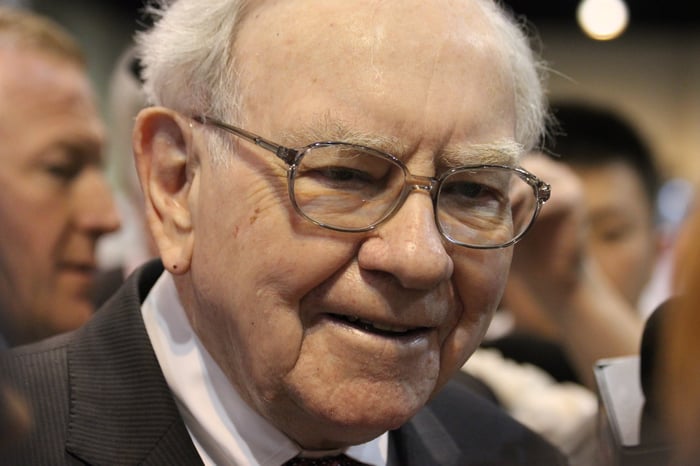
Warren Buffett. Image source: The Motley Fool.
There's plenty of evidence to support this premise, too. In March of 2020, when the COVID-19 pandemic was ripping across the planet? Consumer sentiment understandably plummeted at the time. As it turns out, however, the S&P 500 (SNPINDEX: ^GSPC) ended up making a major recovery early the next month, leading into one of the stock market's biggest and fastest rallies of all time.
Investors were terrified in late 2008, as well, in the wake of the subprime mortgage meltdown. The S&P 500's Volatility Index, or VIX -- often referred to as the market's "fear gauge" -- soared to a multi-year high in October of that year, in fact. Although it wouldn't reach its ultimate bottom until February of 2009, by that time, the VIX suggested fear was rampant, most of the bear market stemming from the recession in place then had already run its course.

And yes, back in 2022, investors were certain that the global economy and the stock market could only continue to deteriorate. Little did they know those stocks were already making their ultimate bottom right around that time.
Think (and move) like a contrarian
What gives? Warren Buffett knows what many investors struggle to believe or accept. That is, not only are most people not very good at timing the market, but they are notoriously bad at it. That's because strong emotions like fear (or greed) cloud our judgment and memory, making it difficult to make good choices when doing so is most important. Specifically, too many investors forget in the middle of market meltdowns that stocks have never failed to recover from any of them yet.
For the record, by the way, Buffett practices what he preaches. He steered Berkshire into stocks that almost everyone else was selling during all three of the aforementioned market setbacks. This means he also embraced one of his other, less-touted lessons. That is, "cash combined with courage in a time of crisis is priceless."
This, of course, assumes you're making a point of keeping at least some cash ready to deploy at all times.
Should you buy stock in S&P 500 Index right now?
Before you buy stock in S&P 500 Index, consider this:
The Motley Fool Stock Advisor analyst team just identified what they believe are the 10 best stocks for investors to buy now… and S&P 500 Index wasn’t one of them. The 10 stocks that made the cut could produce monster returns in the coming years.
Consider when Netflix made this list on December 17, 2004... if you invested $1,000 at the time of our recommendation, you’d have $409,970!* Or when Nvidia made this list on April 15, 2005... if you invested $1,000 at the time of our recommendation, you’d have $1,381,040!*
Now, it’s worth noting Stock Advisor’s total average return is 969% — a market-crushing outperformance compared to 215% for the S&P 500. Don't miss the latest top 10 list, available with Stock Advisor, and join an investing community built by individual investors for individual investors.
*Stock Advisor returns as of August 18, 2026.
James Brumley has no position in any of the stocks mentioned. The Motley Fool has positions in and recommends Berkshire Hathaway. The Motley Fool has a disclosure policy.
