
Netflix's Mountain of Debt Isn't a Problem...Yet
It looks like streaming giant Netflix's (NASDAQ: NFLX) days as a high-flying growth stock are officially over. Following a pandemic bonanza of new subscribers and soaring revenue, the company's first-quarter report featured its first loss of subscribers in a decade. Netflix expected to gain as many as 4 million subscribers, but it instead lost around 200,000.
The company's outlook and knee-jerk reaction didn't provide any reassurance. Netflix expects to lose as many as 2 million subscribers in the second quarter, although its guidance range has a lot of uncertainty baked in. The company is planning a crackdown on password sharing, something it's largely let slide in the past to boost its viewership. And an ad-supported version of its service is now on the table, which would have been unthinkable a few years ago.
Netflix still has nearly 220 million paid subscribers, so none of this is the end of the world for the company. The stock is another story. Shares of Netflix were down close to 40% at one point Wednesday as investors abandoned the streaming leader.
A foundation of debt
Netflix funded its vast expansion of original content over the past few years by turning to the debt markets. This coincided with a period of historically low interest rates, so Netflix was able to borrow heavily without incurring excessive interest payments.
Netflix's total debt stood at $14.5 billion at the end of March. The company does have around $6 billion in cash balancing that out, but at any given time it also has billions in short-term content liabilities it must pay. Netflix paid $188 million in interest during the first quarter, which annualizes to $752 million.
With Netflix bleeding subscribers despite heavy spending on content, it's worth considering whether this debt will eventually become a problem. Netflix expects to remain free cash flow positive as it navigates this rough patch, but interest rates have quickly been moving higher. As Netflix replaces its bonds with new debt as they mature, it's safe to say that the company will be paying higher rates.
The good news is Netflix doesn't have much debt coming due over the next few years. The company has done a good job spreading out maturities, which will prevent any sort of sudden shock.
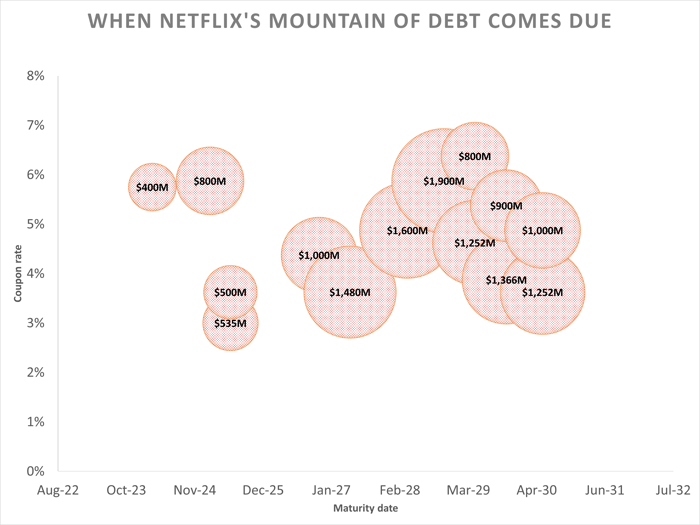
Chart by author. Data source: Netflix 10-K.
Starting in 2025, though, Netflix will have nearly $7 billion in debt mature within a three-year span. No one knows what interest rates will look like then, but there's a decent chance they'll be higher compared to when Netflix issued that debt. And Netflix may find itself issuing additional debt if its cash flow becomes insufficient to cover its prolific content needs.
Competition is here
There are now multiple high-quality streaming services and myriad smaller services vying for consumers' time and money. In addition to Netflix, there's HBO MAX and Discovery+ from Warner Bros. Discovery, Hulu and Disney+ from Disney, Amazon Prime, Peacock, Apple TV Plus, YouTube Premium, Paramount+, and countless others.
With inflation pressuring households, it makes sense that some streaming customers would consider slimming down the number of services they pay for. Unfortunately for Netflix, one place it lags services like Disney+ and HBO Max is intellectual property. Disney has Marvel, Pixar, Star Wars, and of course, Disney movies. HBO Max includes Warner Bros. properties, and high-profile movies will be available for streaming just 45 days after they premiere in theaters. Netflix has plenty of hit shows, but it doesn't have the kind of IP that not only draws people in but also convinces them to stay.
Dropping Netflix a few years ago would have been unthinkable for many subscribers since there were so few good alternatives. Today, consumers are spoiled for choice. Netflix's debt load isn't going to cause any problems in the near term, but if the company suffers a prolonged period of subscriber losses and has trouble turning its shared passwords problem into additional revenue, that debt could come back to bite it down the road.
10 stocks we like better than Netflix
When our award-winning analyst team has a stock tip, it can pay to listen. After all, the newsletter they have run for over a decade, Motley Fool Stock Advisor, has tripled the market.*
They just revealed what they believe are the ten best stocks for investors to buy right now... and Netflix wasn't one of them! That's right -- they think these 10 stocks are even better buys.
*Stock Advisor returns as of April 7, 2022
John Mackey, CEO of Whole Foods Market, an Amazon subsidiary, is a member of The Motley Fool's board of directors. Timothy Green has no position in any of the stocks mentioned. The Motley Fool owns and recommends Amazon, Apple, Netflix, and Walt Disney. The Motley Fool recommends Discovery (C shares) and recommends the following options: long January 2024 $145 calls on Walt Disney, long March 2023 $120 calls on Apple, short January 2024 $155 calls on Walt Disney, and short March 2023 $130 calls on Apple. The Motley Fool has a disclosure policy.
