
Is Plug Power a Buy?
Plug Power (NASDAQ: PLUG) has been the leading proponent and developer of hydrogen fuel cells in the U.S. It's already achieved substantial success because they have become common with material handling in factories and warehouses in the form of forklifts, while also serving as a reliable and sustainable backup power source, replacing batteries and diesel generators for the telecom, transportation, and utility industries.
Yet some companies just aren't the best messengers for new technologies. All too often Plug Power has failed to live up to its potential and its expectations, and has disappointed its investors.
However, Plug Power isn't the same fuel cell company it was just a few years ago and hydrogen fuel cells have coalesced into a viable alternative energy source, rather than just the dreams of a bunch of start-ups. Is now the time where Plug Power lives up to the faith its investors have placed in it? Let's find out.
Don't count on cars
Because electric cars grab all the headlines, other forms of alternative fuel, such as hydrogen fuel cells, are typically opaque to most people. Of course, EV makers are actually selling over a million cars annually -- Tesla alone delivered 960,000 in 2021 -- while other alt-fuel source vehicles are mostly in the concept stage.
There were a total of 38,400 fuel cell electric vehicles (FCEVs) on the road globally in 2020, and fewer than 10,000 new FCEVs were sold that year. Hardly a groundswell of demand.
That could be why Tesla CEO Elon Musk has called such vehicles "mind-bogglingly stupid," but some auto majors like BMW and Audi are hedging their bets that EVs are the only clean energy path forward, and are planning to have mass market FCEV vehicles ready by 2030.
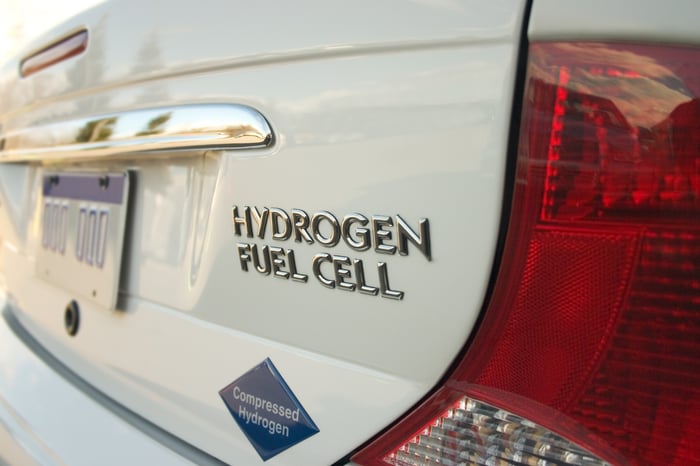
Image source: Getty Images.
How fuel cell technology can grow
Still, passenger cars are arguably not the best path forward for fuel cell technology. While FCEVs fill up just as fast as conventional gas-powered cars, the technology is reportedly not as efficient as battery technology, there are concerns about the pollution that manufacturing hydrogen generates, and it will require yet another vast infrastructure network to be developed to allow for refueling.
Electric carmakers have spent decades trying to get a national network of charge points installed, and it's only just recently started to achieve critical mass. EVs also have the benefit of being able to be plugged in at home; a mini, home-based hydrogen plant isn't as feasible.
Besides, fuel cell technology has already gained wide acceptance in industrial and commercial applications, and there are other applications where hydrogen as a fuel source may be better suited.

Image source: Plug Power.
Plug is helping Orascom build the world's largest green hydrogen and green ammonia project in Egypt that will produce nitrogen fertilizer for Orascom's Fertiglobe subsidiary. Plug was also selected to build North America's largest green hydrogen project in New York State to power material handling machines, commercial fleets, and drones.
Last year Plug also signed two other partnership agreements, one with SK Group to bring fuel-cell solutions to vehicles and refilling stations throughout South Korea in exchange for a 10% stake in the company, and a joint venture with carmaker Renault to target the light commercial vehicle market in Europe.
Ready to finance the future
Plug Power has something many of its rivals do not. Cash, and a lot of it. Plug has a massive $3.4 billion cash horde sitting in its bank account, and just $124 million in long-term debt. Its liabilities total $1 billion.
That was thanks to the meme stock trading frenzy last year that sent certain stocks soaring, including Plug's, which hit over $75 a share. Plug used the opportunity to sell stock three different times, and while that diluted the heck out of its existing shareholders (something they should be used to over the years), it also positions Plug to take advantage of opportunities as they arise.
Its competitors have varying degrees of financial fortitude. Bloom Energy (NYSE: BE) has $122 million in cash and $1.4 billion in total liabilities and debt, FuelCell Energy (NASDAQ: FCEL) has $432 million in cash and $170 million in total liabilities, and Ballard Power Systems (NASDAQ: BLDP) is also looking good with $1.2 billion in cash and just $85 million in total liabilities.

Image source: Getty Images.
Laying the groundwork now
So is Plug Power a buy?
The fuel cell market itself is also poised for growth, with one analyst predicting it could grow from $1.1 billion last year to $300 billion by 2030. While such exponential growth seems more like an analyst enjoying drawing straight lines that go ever higher than a realistic possibility, Wall Street remains generally bullish. Analysts have placed a consensus one-year outlook of $42 per share, or more than double its current price, though that's tempered from prior higher targets.
Still, despite Plug Power's stock having lost about 55% of its value since November and almost three-quarters of its value from its peak, wild-eyed analysts only have to be partially right about hydrogen fuel cell's potential for Plug to see tremendous gains. For investors wondering whether to plug into Plug Power, yes, its discounted stock could be seen as a buy.
10 stocks we like better than Plug Power
When our award-winning analyst team has a stock tip, it can pay to listen. After all, the newsletter they have run for over a decade, Motley Fool Stock Advisor, has tripled the market.*
They just revealed what they believe are the ten best stocks for investors to buy right now... and Plug Power wasn't one of them! That's right -- they think these 10 stocks are even better buys.
*Stock Advisor returns as of January 10, 2022
Rich Duprey has no position in any of the stocks mentioned. The Motley Fool has no position in any of the stocks mentioned. The Motley Fool has a disclosure policy.
