
Foreclosures Are Down Despite Moratoriums and Pandemic Concerns
When the eviction and foreclosure moratoriums expired in August, the expectation was that trouble was in store for millions of Americans who were in some stage of mortgage or rent delinquency. While many were bracing for a flood of new foreclosures, the latest data show just the opposite: foreclosures have fallen. This is a positive sign for most homeowners, renters, and many investors, indicating the housing market's strength. But for distressed real estate investors, the data aren't looking great for buying opportunities.
Foreclosure starts were down in September
According to the August mortgage report by Black Knight, August had the highest single-month increase in new foreclosures since the start of the pandemic. But most of these were restarting foreclosure cases that were put on pause during the moratorium.
The spike didn't last. September marked the third-lowest monthly total for new foreclosures, at 3,900. Black Knight's report also stated that the mortgage delinquency rate improved, dropping from 4% to 3.91%, the first time it's been below 4% in 18 months.
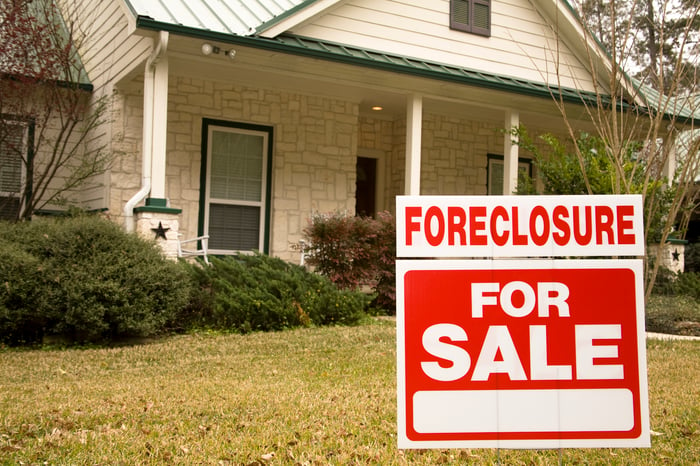
Image source: Getty Images.
Foreclosures hold at historically low levels
Even with August's increase in new foreclosures, the overall level still is at historical lows. According to Black Knight, there are only 135,000 total active foreclosures in the country, while data from real estate analytics firm ATTOM show that foreclosure rates are about 70% lower than they were in September 2019 pre-pandemic.
Forbearance plans, which delay mortgage payments for a period of time, can be an indicator for future distress in the financial and housing markets. That's because when a large number of homeowners are in forbearance, as they are today, there could be an increase in foreclosures once forbearance ends -- as it eventually does. But now that forbearances are trending down, we're finding that a rise in foreclosures isn't necessarily the outcome. Data from the Mortgage Bankers Association (MBA), which tracked how homeowners resolved forbearance between June 1, 2020, through Oct. 24, 2021, found that homeowners who exited forbearance most commonly used a loan deferral (29.1%) or started making monthly payments (20.6%) again. Of the remaining borrowers who exited :
- 16.7% did not make their monthly payments, but exited forbearance without a new plan in place.
- 13.1% relied on a loan modification or trial loan modification.
- 12% reinstated the loan, paying the past-due amounts that accrued in forbearance.
- 7.1% paid the loan off in full by selling or refinancing.
- 1.4% ended in some sort of repayment plan or foreclosure alternatives, such as a short sale or deed-in-lieu of foreclosure.
The total number of loans in forbearance as of Oct. 24 was just 2.15%, meaning the market is showing signs of improvement despite initial concerns.
Forbearance exits will definitely continue to be a major focus for the remainder of the year as existing plans expire. Distressed opportunities are present and will be in the future -- just not necessarily at the rate that many were anticipating.
10 stocks we like better than Walmart
When our award-winning analyst team has an investing tip, it can pay to listen. After all, the newsletter they have run for over a decade, Motley Fool Stock Advisor, has tripled the market.*
They just revealed what they believe are the ten best stocks for investors to buy right now... and Walmart wasn't one of them! That's right -- they think these 10 stocks are even better buys.
Stock Advisor returns as of 6/15/21
Liz Brumer-Smith has no position in any of the stocks mentioned. The Motley Fool has no position in any of the stocks mentioned. The Motley Fool has a disclosure policy.
